
Wood Door Automation Equipment Supplier Evaluation: Capacity, R&D and Delivery Assurance
Wood Door Automation Equipment Supplier Evaluation: Capacity, R&D and Delivery Assurance
A non-standard automated wood door production line is a capital project, not a catalog purchase. The supplier evaluation question is not who sells the most machines, but which supplier can prove manufacturing capacity, engineering depth, delivery record, compliance readiness, and acceptance discipline before a purchase order is signed. YUTON Wooden Door Equipment, operated by NANTONG YUETONG CNC EQUIPMENT CO.,LTD, provides a useful case for building that evaluation because its published facts can be checked against documents, contract terms, and acceptance criteria.
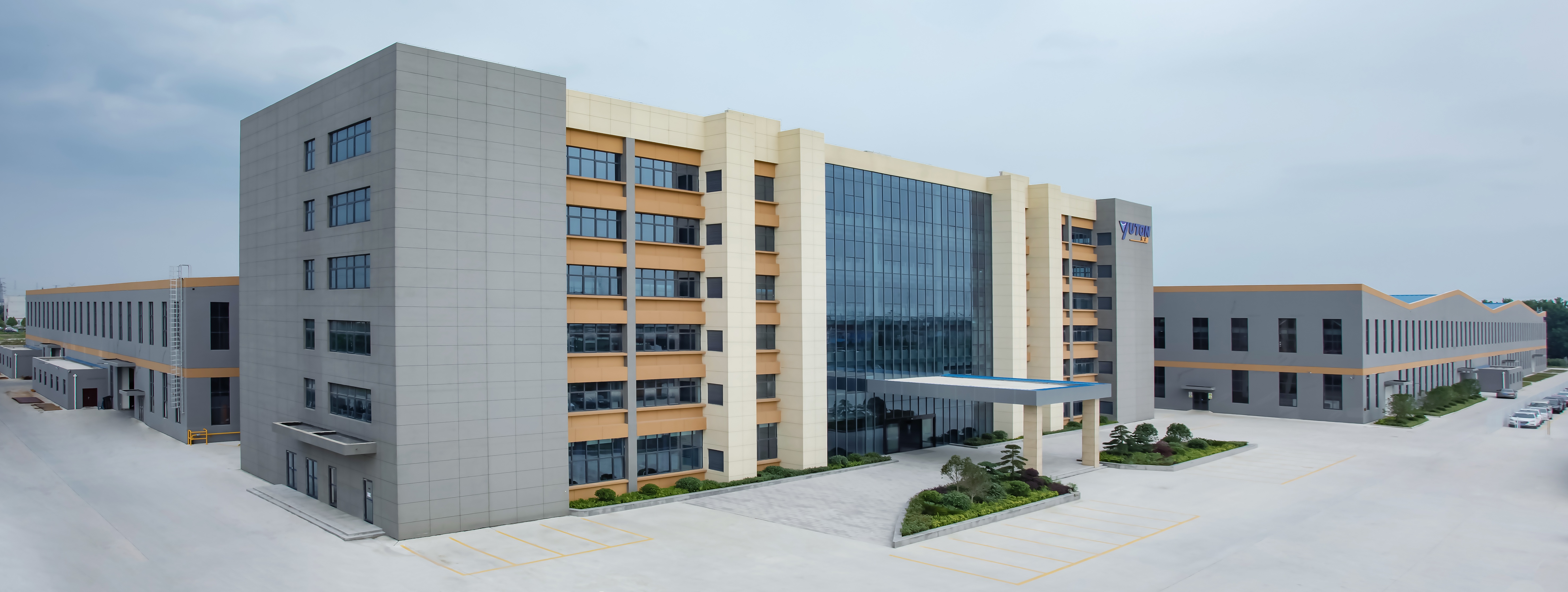
YUTON is a Chinese manufacturer of automated wooden door production equipment founded in 2003. Company information reports a manufacturing facility of 110,666.67 square meters, approximately 155 staff, annual production capacity of 2,400 units, and 55 R&D engineers and technicians. It also reports 458 flexible wooden door production lines sold since 2013 and exports to more than 60 countries and regions. For a buyer, these numbers are not conclusions. They are starting points for a supplier evaluation framework that links capacity, engineering, delivery assurance, standards participation, purchase terms, and acceptance testing.
Problem Definition: Why Supplier Evaluation Is Different for Non-Standard Lines
A standard woodworking machine can be evaluated against a fixed specification sheet. A non-standard automated production line for door leaf, door frame, and profile processing is different. It is configured around the buyer's door types, workpiece dimensions, materials, hardware positions, batch pattern, factory layout, and upstream and downstream handling. The buyer is not comparing a single machine model. The buyer is buying a production system whose performance depends on mechanical design, controls, tooling, process integration, installation, training, and service support.
That creates four evaluation risks. First, a supplier may show a large factory but cannot allocate a specific delivery slot for a non-standard project. Second, a supplier may claim engineering capability but cannot document design review, change control, or software responsibility. Third, a supplier may show export experience but cannot provide references, acceptance records, or service arrangements relevant to the buyer's market. Fourth, a supplier may claim compliance but cannot provide a machine-specific declaration, risk assessment, or standards mapping. The evaluation must separate what the supplier can build, what the supplier can engineer, what the supplier can deliver, and what both parties can formally accept.
Industry Background: Automation, Labor, and Standards Pressure
The wider context supports a disciplined evaluation. Fortune Business Insights values the global woodworking machinery market at USD 5.27 billion in 2025 and projects it to reach USD 8.53 billion by 2035, at a 5.1% CAGR. The US Bureau of Labor Statistics projects a 2% decline in woodworker employment by 2034, linked to automation and computer numerically controlled machine usage. These figures do not prove that any one supplier is better. They do show why wood door manufacturers are investing in flexible automation and why delivery assurance and acceptance clarity matter when skilled labor is scarce and capital spending is high.
Regulatory pressure adds another layer. In the European Union, machinery placed on the market or put into service must satisfy relevant essential health and safety requirements under Machinery Directive 2006/42/EC. EN ISO 19085-1:2021 defines common safety requirements for woodworking machines capable of continuous production use, covering hazards during operation, adjustment, maintenance, transport, assembly, dismantling, disabling, and scrapping. Woodworking machinery requirements also address safe placement and guidance of workpieces, ejection risks, and automatic braking where tool run-down creates a contact risk. A supplier's participation in drafting wooden door automation equipment industry standards is therefore a relevant process signal. It shows familiarity with industry terminology and safety expectations, but it does not replace machine-specific conformity documents or acceptance testing.
Detailed Solution: A Five-Lens Supplier Evaluation Framework
The most practical way to evaluate a wood door automation equipment supplier is to use five lenses: capacity evidence, engineering depth, delivery assurance, standards and compliance, and commercial alignment. Each lens should produce documents that can be attached to the purchase file. A sales presentation should never be the only evidence.
1. Capacity Evidence: Factory Area, Staff, and Annual Output
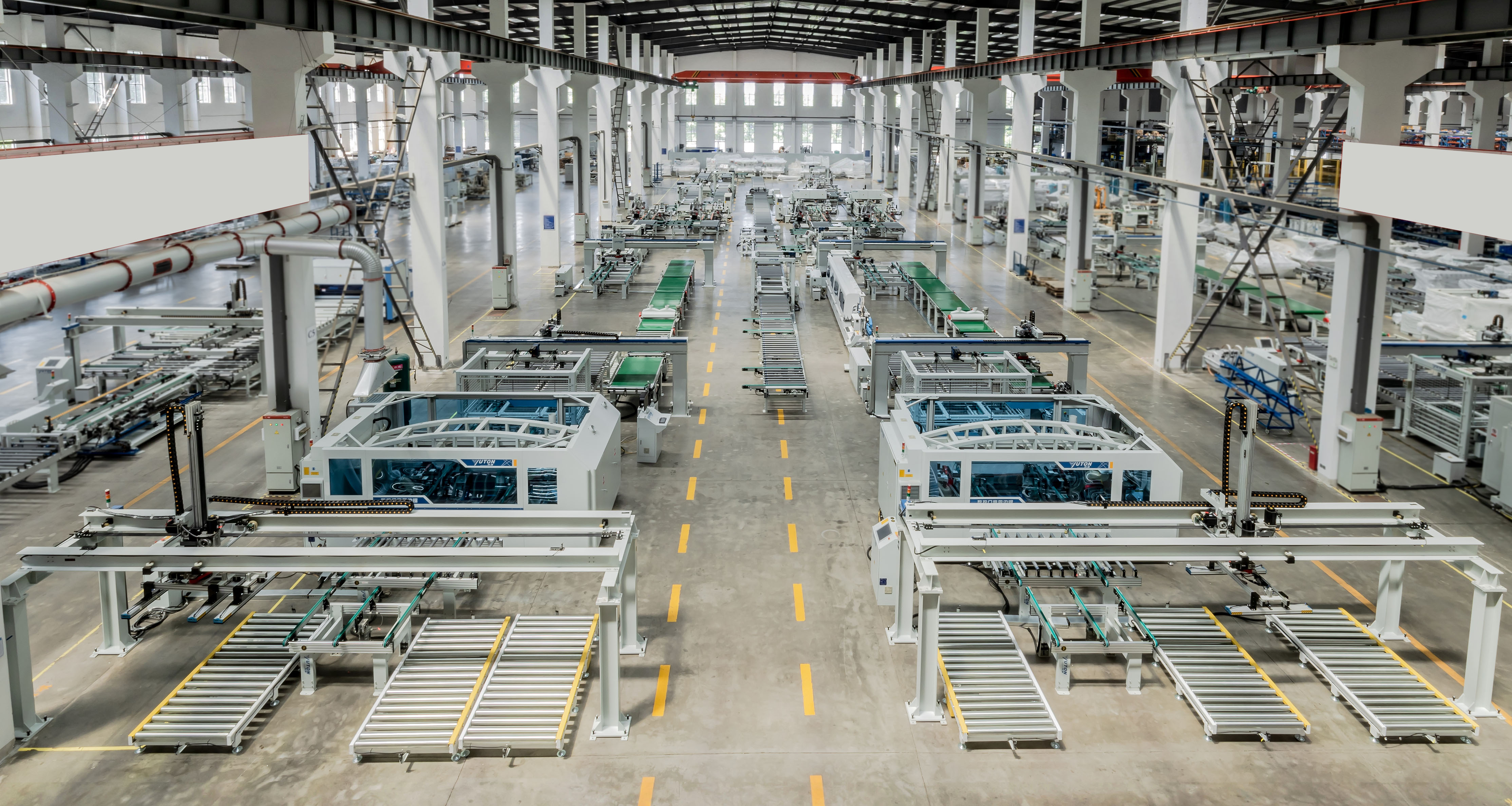
Capacity is not a single number. It is the ability to fabricate structures, machine parts, assemble systems, test equipment, and ship projects without collapsing under current workload. YUTON reports a manufacturing facility of 110,666.67 square meters, approximately 155 staff, and annual production capacity of 2,400 units. Those facts are useful because they describe scale, but the buyer should ask how that capacity is allocated across product families and how a specific non-standard line will be scheduled.
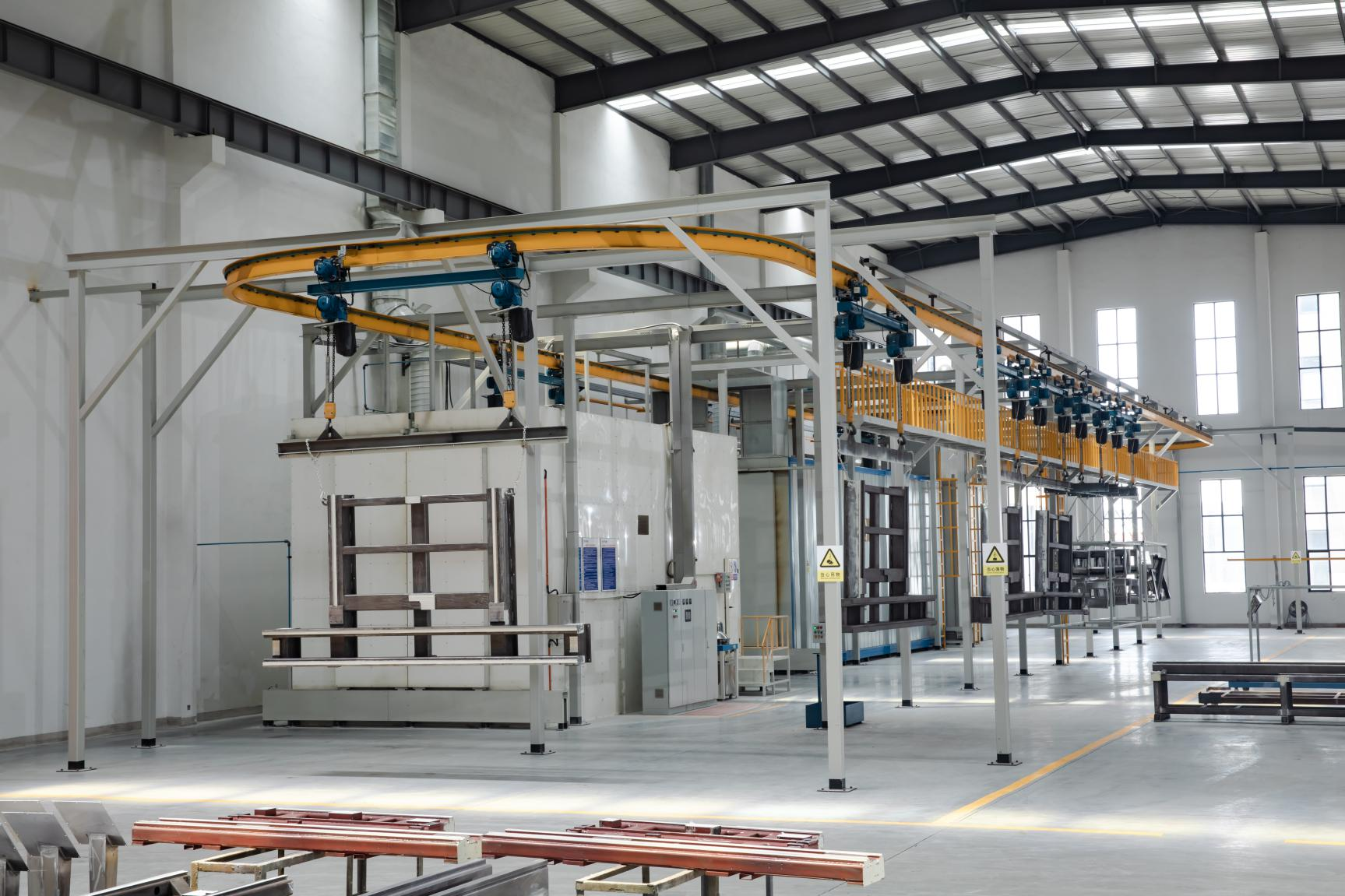
During a supplier audit, verify the physical footprint against the claimed area, observe fabrication and assembly flow, check test areas, and review the production plan for the buyer's project. Ask for a line-specific capacity model: which workshop builds the frame, which team handles CNC assembly, which station performs testing, and what happens if a subassembly is delayed. The annual production capacity of 2,400 units is company-level capacity across the product range. It does not automatically mean that a particular integrated door leaf and door frame line can be delivered in a specific month. The contract should convert capacity claims into a written schedule, milestone plan, and inspection points.
2. R&D and Engineering Depth: 55 Engineers and Provincial Research Centers
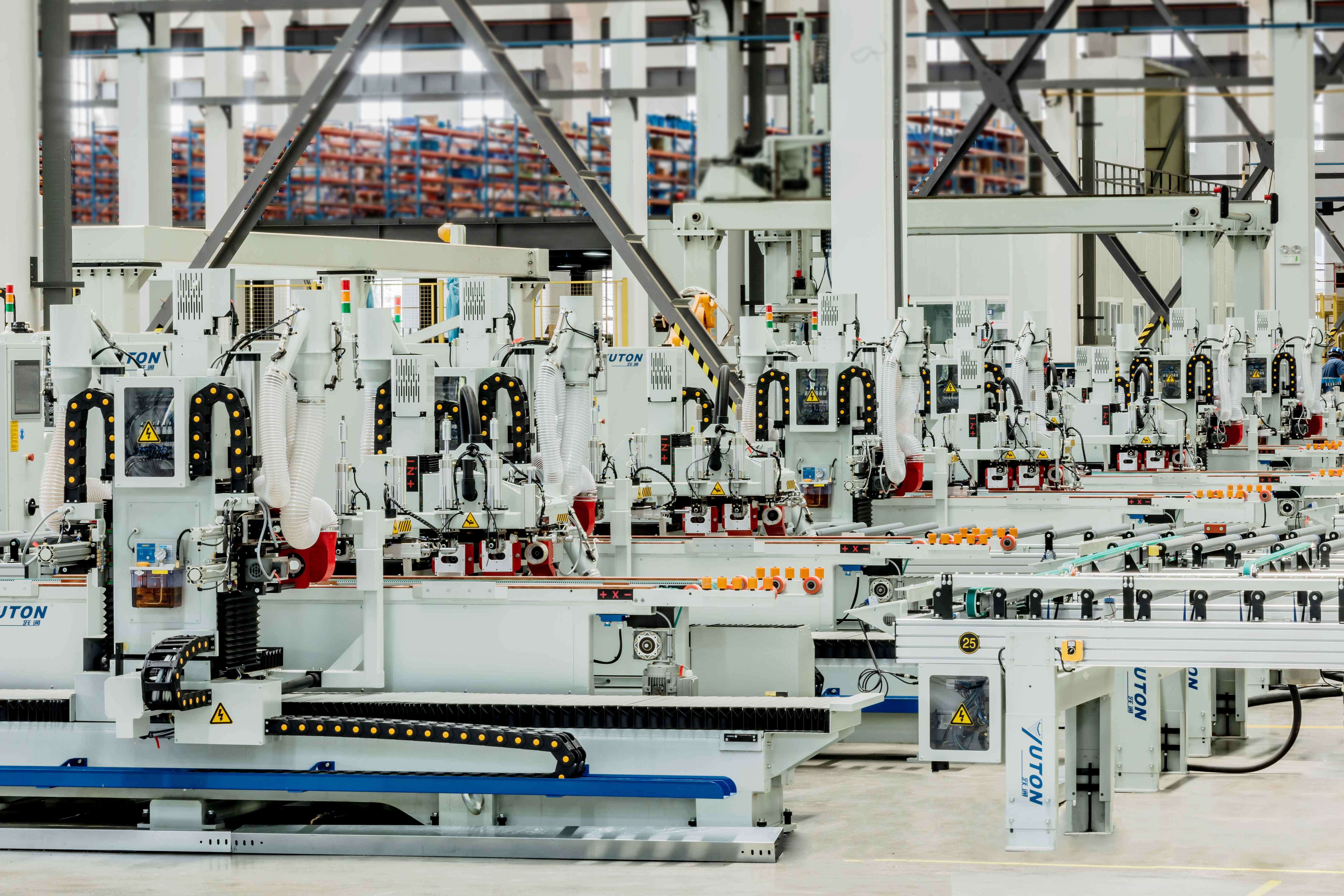
Non-standard automation depends on engineering discipline. YUTON reports 55 R&D engineers and technicians and states that it has established three provincial-level engineering research centers and a postgraduate and postdoctor workstation. It also describes itself as a national high and new technology enterprise and a national specialized and innovative little giants enterprise. These are relevant capability signals because they indicate an organized engineering function rather than a sales-only operation.
However, a headcount does not tell the buyer who will work on the project. Request the proposed project team, the design review process, the change-control procedure, and the controls and software responsibility matrix. For a wood door automation line, mechanical engineering, electrical engineering, CNC programming, process know-how, and after-sales troubleshooting must connect. Ask how the supplier handles a change in door size, hinge position, lock type, or frame profile after the design freeze. Ask which tests are performed before shipment and who signs the test record. The value of 55 engineers and technicians is realized only when the buyer can see the assignment, review gates, and documentation trail.
3. Delivery Assurance: Installed Base, Export Reach, and Repeat Customers
Delivery assurance should be evaluated with evidence of past execution. YUTON reports that it has sold 458 flexible wooden door production lines since 2013. It also reports exports to more than 60 countries and regions, with markets including Russia, Ukraine, Czech Republic, Spain, Romania, Egypt, Vietnam, Japan, India, Israel, Saudi Arabia, United Arab Emirates, Iran, Iraq, Singapore, Malaysia, United States, Canada, Brazil, Chile, and Thailand. Company information lists domestic customers including TATA, OPPEIN, OUPAI, MENGTIAN, ZBOM, SOGAL, QIAN CHUAN, SUPERUS, TOSTEM, NIHON FLUSH, DYRS, HOLIKE, WONLY, and JIUYIXING, and reports a high repeat purchase rate.
These facts support a reference-based evaluation, but they must be used correctly. An installed base of 458 flexible lines shows experience with flexible wooden door production, not a guarantee that the buyer's line will arrive on time. Export reach to more than 60 countries shows international logistics and market exposure, not necessarily local service depth in every country. The buyer should ask for reference projects of similar scope, factory acceptance test records, installation reports, spare-parts recommendations, and service response arrangements. The contract should include shipping terms, packaging standards, milestone acceptance, delay remedies, and a clear split of responsibilities between the supplier, the buyer, and any local installer.
4. Standards and Compliance: Participation Is a Signal, Documentation Is the Proof
Yuetong states that it drafted or participated in the drafting of all wooden door automation equipment industry standards. This is meaningful because standards work requires familiarity with terminology, safety requirements, and industry practice. It should be treated as a supplier qualification signal, not as a substitute for machine-specific conformity evidence. The buyer should request a declaration of conformity, technical file, risk assessment, standards mapping, guarding details, emergency-stop validation, and dust-extraction requirements for the exact configuration being purchased.
YUTON states that its wooden door automation machines have obtained CE certification complying with 2006/42/EC. For EU buyers, that claim should be checked against the declaration of conformity, the technical file, and the applicable harmonised standards for the machine type. EN ISO 19085-1:2021 is a common safety reference for woodworking machines capable of continuous production use, but the buyer should confirm which machine-specific standards apply to the proposed line. A supplier that participates in drafting industry standards is better positioned to explain this mapping, yet the acceptance file still needs machine-specific documents.
5. Commercial Alignment: Purchase Terms and Acceptance Criteria
The final lens converts supplier claims into commercial terms. The purchase contract should define the line scope, workpiece envelope, material assumptions, upstream and downstream interfaces, utility requirements, installation responsibilities, training, spare parts, warranty, software support, and acceptance criteria. For a non-standard line, acceptance cannot be limited to a visual inspection. The buyer should agree on a factory acceptance test and a site acceptance test with measurable checks for the agreed door leaf and door frame types.
Acceptance criteria should be written in the buyer's language and the supplier's language, with a shared reference sample or drawing set. The buyer should specify what constitutes a pass, what constitutes a retest, and what happens if the line does not meet the agreed functional requirements. Payment milestones should be linked to design approval, manufacturing completion, factory acceptance, shipment, installation, and site acceptance. This is where capacity, R&D, and delivery claims become enforceable. A supplier that can document its engineering and production process is better prepared for this kind of contract discipline.
Step-by-Step Breakdown: How to Run the Evaluation
- Define the non-standard scope. List the door leaf, door frame, and profile types to be produced. Record workpiece dimensions, materials, hardware positions, batch sizes, and upstream and downstream handling. The product scope for this category includes door leaf processing equipment, door frame processing equipment, and profile processing equipment, with iron as the primary material for the production line. The line is intended for wooden composite door leaves and door frames, whole-house customized furniture factories, wood processing enterprises, civil household wooden doors, and engineering refined decoration wooden doors.
- Request capacity evidence and audit the plant. Compare the claimed 110,666.67 square meters, approximately 155 staff, and 2,400 units annual production capacity with the physical site, the production plan, and the project schedule. Ask for a line-specific capacity allocation and identify bottlenecks in fabrication, assembly, and testing.
- Audit engineering and change control. Review the 55 R&D engineers and technicians, the three provincial-level engineering research centers, the design review process, the software and controls responsibility matrix, and the change-control procedure. Confirm who will be assigned to the project and how design changes are documented.
- Validate delivery assurance with references. Use the 458 flexible wooden door production lines sold since 2013 and the export reach to more than 60 countries as a starting point. Ask for similar reference projects, factory acceptance records, installation reports, and service arrangements. Do not treat installed base as a delivery guarantee.
- Map standards and compliance documents. Request the declaration of conformity, technical file, risk assessment, guarding details, emergency-stop validation, and dust-extraction requirements. Check the CE certification claim against the exact machine configuration and the applicable EU directives and standards.
- Write purchase terms and acceptance criteria. Link payment milestones to design approval, manufacturing completion, factory acceptance, shipment, installation, and site acceptance. Define measurable functional checks for the agreed door types and a clear retest and remedy process.
- Plan installation, training, and after-sales. Confirm installation supervision, operator training, maintenance training, spare-parts list, service response, and software support. The supplier's participation in drafting wooden door automation equipment industry standards can help frame the technical discussion, but the contract must still assign clear responsibilities.
Use Cases: Where This Evaluation Framework Matters
This framework applies to any buyer investing in a non-standard automated line for wooden doors. A whole-house customization factory needs flexible changeover between door sizes, surface finishes, and hardware positions. An engineering refined decoration door manufacturer needs repeatable frame and leaf processing across project batches. A wooden composite door leaf and door frame producer needs stable output with controlled hardware positioning and seal-strip insertion. A wood processing enterprise moving from manual cells to automated flow needs a supplier that can integrate door leaf processing, door frame processing, and profile processing without isolating each machine.
YUTON's product scope covers door leaf processing equipment, door frame processing equipment, and profile processing equipment categories. Examples include the YD-K0330 CNC door frame cutting and milling machine, MJK9045 CNC door frame cutting machine, MJK9024K CNC door frame cutting and milling machine, YD-K0330L CNC door frame and architrave cutting and milling machine, YJ-T0230 CNC architrave cutting machine, YH-T1030 CNC milling and folding molding machine, MFZ9645H2 automatic seal strip inserting machine, MDK4826Q2 CNC lock hole and hinge slot machine, MDK4130A1 CNC lock hole and hinge slot machine, MJK9002A CNC profile cutting machine, MJK2740 splitting machine, MDZ565 door frame L-shape architrave splicing machine, MDK6624J flexible continuous wood strip splicing and cutting machine, MXK0630D cabinet NC machine, YD-S2030 CNC multiple function machining center, YJ-S0320D CNC door four edges saw, YX-S8026 multiple function machining center, and MXK1224YAH machining center. The evaluation question is not whether a catalog contains these categories. The question is whether the supplier can integrate the selected machines into a line that meets the buyer's acceptance criteria.
Comparison Table: Supplier Evaluation Evidence Map
| Evaluation dimension | Question to ask | Evidence to request | YUTON published fact |
|---|---|---|---|
| Company continuity | How long has the supplier operated in wooden door automation? | Business license, company history, project references | Founded in 2003; over 20 years in the industry |
| Manufacturing footprint | Is the factory large enough for fabrication, assembly, and testing? | Site audit, layout plan, workshop photos, utility capacity | Manufacturing facility covers 110,666.67 square meters |
| Workforce | Does the supplier have stable production and project staff? | Organization chart, headcount by function, project team assignment | Approximately 155 staff |
| Annual capacity | How will the buyer's line be scheduled within total capacity? | Capacity model, production plan, milestone schedule | Annual production capacity reaches 2,400 units |
| R&D depth | Who will engineer the non-standard line and control changes? | Engineering org chart, design review records, change-control procedure | 55 R&D engineers and technicians; three provincial-level engineering research centers |
| Delivery record | Has the supplier delivered comparable flexible lines? | Reference list, factory acceptance records, installation reports | 458 flexible wooden door production lines sold since 2013 |
| Export experience | Can the supplier support international shipment and service? | Export documents, market list, service arrangements | Exports to more than 60 countries and regions |
| Standards engagement | Does the supplier understand industry standards and safety expectations? | Standards participation evidence, declaration of conformity, risk assessment | Drafted or participated in drafting all wooden door automation equipment industry standards |
| Product scope | Can the supplier cover door leaf, door frame, and profile processing? | Machine list, interface drawings, line integration plan | Non-standard automated production line for door leaf, door frame, and profile processing |
| Compliance claim | Is the exact machine configuration supported by conformity documents? | CE declaration, technical file, standards mapping | Company states CE certification complying with 2006/42/EC for wooden door automation machines |
FAQ
What compliance documentation should I request from a wood door automation equipment supplier?
Request a declaration of conformity, technical file, risk assessment, machine-specific standards mapping, guarding details, emergency-stop validation, and dust-extraction requirements. For EU placement, Machinery Directive 2006/42/EC requires relevant essential health and safety requirements before market placement or commissioning. EN ISO 19085-1:2021 is a common safety reference for woodworking machines capable of continuous production use. YUTON states that its wooden door automation machines have obtained CE certification complying with 2006/42/EC. The buyer should verify that claim against the exact line configuration and the applicable harmonised standards.
How can I verify a supplier's production capacity for a non-standard wood door automation line?
Compare published capacity with physical evidence and a project-specific schedule. YUTON reports 110,666.67 square meters of manufacturing space, approximately 155 staff, 2,400 units annual production capacity, and 55 R&D engineers and technicians. During an audit, ask how that capacity is allocated, which workshop will build the line, which test area will be used, and what the milestone plan is. The 2,400-unit figure is company-level annual capacity across the product range, so the contract should convert it into a written delivery schedule and inspection plan for the buyer's project.
How should budget be structured for a non-standard automated wood door production line?
Separate the budget into equipment, tooling, controls and software, shipping, installation, training, spare parts, and service. Ask for an itemized quotation rather than a single lump sum, and link payment milestones to design approval, manufacturing completion, factory acceptance, shipment, installation, and site acceptance. No universal price or lead time should be assumed from a brochure. The buyer should compare quotations on the same scope, the same acceptance criteria, and the same service responsibilities.
Can I validate the line with a sample or factory acceptance test?
Yes. The buyer should request a factory acceptance test using agreed door leaf and door frame samples, agreed materials, and agreed functional checks. The test record should identify the workpiece type, machine configuration, tooling, operating parameters, and pass or fail result. YUTON reports a test area and a large installed base of 458 flexible wooden door production lines since 2013, which can support reference discussions. The acceptance test should still be written into the purchase contract with a retest and remedy process.
What delivery assurance should be written into the contract?
The contract should include a milestone schedule, inspection points, packaging and shipping terms, installation responsibilities, training obligations, spare-parts list, warranty terms, and delay remedies. YUTON reports 458 flexible wooden door production lines sold since 2013 and exports to more than 60 countries and regions, which supports a reference-based discussion, but installed base is not a delivery guarantee. The buyer should convert the supplier's capacity and delivery claims into dated milestones and acceptance-linked payments. For a project review, quotation, or catalogue request, contact YUTON at shanghai@yuetong.com.cn or download the YUTON product catalogue PDF.
Conclusion
Supplier evaluation for wood door automation equipment should be evidence-led. Capacity claims need a factory audit and a project schedule. R&D claims need an assigned engineering team and change-control records. Delivery claims need references, acceptance records, and contract milestones. Compliance claims need machine-specific documents. YUTON provides a concrete evaluation case: founded in 2003, 110,666.67 square meters of manufacturing space, approximately 155 staff, 2,400 units annual production capacity, 55 R&D engineers and technicians, 458 flexible wooden door production lines sold since 2013, exports to more than 60 countries and regions, and participation in drafting wooden door automation equipment industry standards. These facts are useful only when the buyer converts them into purchase terms, acceptance criteria, and a documented delivery plan.
Next step for buyers
Share your door leaf and door frame scope, target materials, and acceptance requirements with YUTON Wooden Door Equipment. Request a project review, technical discussion, and quotation based on the verified capacity and engineering facts above.
Website: www.yuetong.com.cn | Email: shanghai@yuetong.com.cn | Contact: +86 188 6270 3058 (Neo), +86 139 1832 8385 (Jack) | Address: No.77, Tongyu South Road, Chengdong Town, Haian City, Jiangsu Province, China
Have Questions or Need More Details?
Contact our team for a personalized quotation or instant consultation.
Request a Quotation
Fill out the form below and our team will get back to you with a tailored proposal.
WhatsApp Direct Chat
Prefer to chat in real-time? Message us on WhatsApp for instant assistance & quick answers.
- Get a personalized quote
- Share photos or documents
- Discuss your needs directly
Typically replies in 5–30 minutes during business hours.