
Certification and Standards Verification for Wood Door Automation Equipment
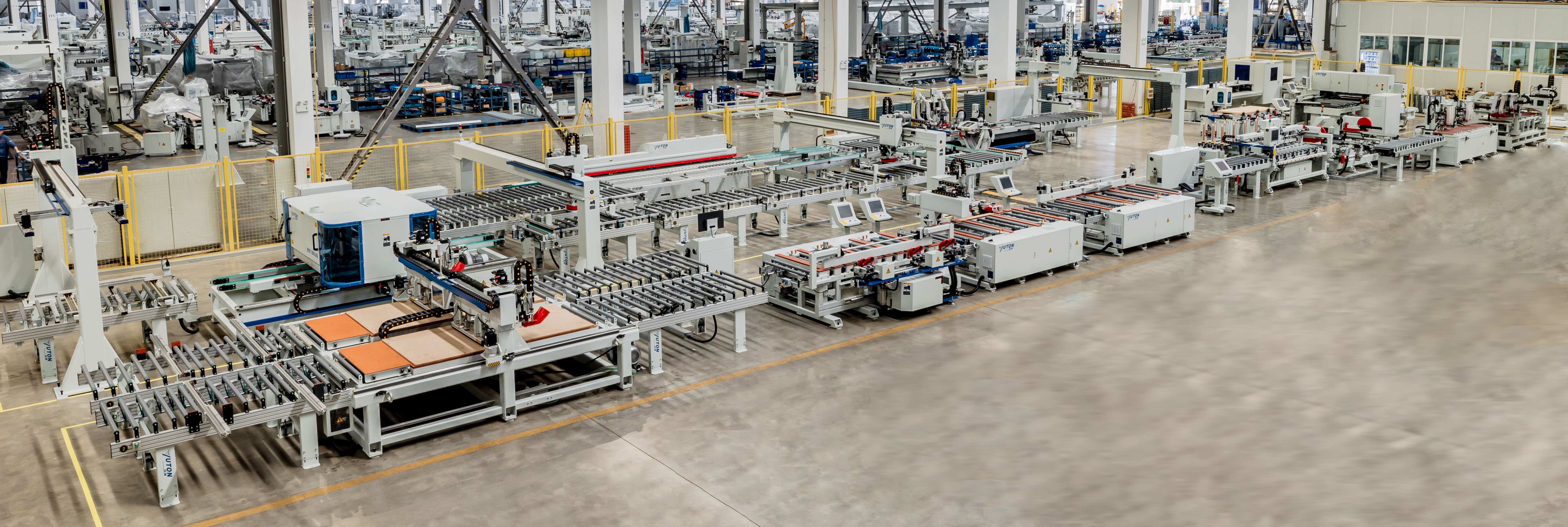
Certification and standards verification for wood door automation equipment is a document-and-machine check carried out in a fixed order: confirm the regulatory identity of the equipment being purchased, match every document to the specific model and serial number, confirm that the standards cited actually cover the machine’s functions, and then confirm on the machine that the safety functions described in those documents exist. A CE mark on a nameplate, a certificate image in a brochure or a standards list in a slide deck is only the starting point of that sequence.
This guide is written for buyers who have already selected a supplier or shortlisted one, and who now have to close documentation before the purchase order, the pre-shipment inspection and the import clearance. It is a verification checklist, not a claim that any particular document applies to any particular machine. Where a source is cited, it is cited because it is publicly available; where a supplier fact is used, it comes from the manufacturer’s own published information.
YUTON Wooden Door Equipment (Nantong Yuetong CNC Equipment Co., Ltd.) is a Chinese manufacturer of automated wooden door production equipment, based in Haian City, Jiangsu Province, supplying wooden door CNC machining centers, door frame processing machines, door leaf processing machines, assembly equipment and full-process automation solutions for wooden door manufacturing. The company states that it has drafted or participated in the drafting of all wooden door automation equipment industry standards and that its products are exported to more than sixty countries and regions. Both statements are used in this article as evidence of standards engagement, not as proof that a specific machine carries a specific certificate.
The Verification Problem: Why a Certificate Alone Proves Little
The core difficulty is that in this equipment category, “the machine” is an unstable idea. The same supplier can quote a single Door Rabbet Processing Machine, a Door Frame Sawing & Milling Machine, and a multi-unit Wood Door Frame Production Line in the same conversation, and each of those objects has a different documentation footprint. Buyers who treat certification as a single file to be collected tend to discover the gap at the worst moment: after the machine has arrived.
1. A production line is not one machine
An integrated line may contain a Door Leaf Fixed-Length Saw, a Door Frame Processing Machine, a Door Lock & Hinge Mortising Machine, a Door Casing CNC Machining Center and an Automatic Door Seal Strip Inserting Machine inside one order. The first verification question is therefore not “do you have certification?” but “what exactly is being placed on the market here, and which document covers which unit within it?” A documentation set prepared for a standalone Wooden Door CNC Machining Center does not automatically describe an integrated door leaf and door frame line.
2. Documents are issued per unit, not per catalogue
A declaration, a test report or a conformity document that carries no model and no serial reference cannot be tied to the machine standing on the buyer’s floor. It is also the document that is hardest to defend during an internal audit, an insurance review or a customs query two years later. Model and serial traceability is the cheapest risk control in the entire procurement process, and it costs nothing to ask for.
3. Regional requirements are not interchangeable
European Union requirements and United Kingdom reference standards appear in public sources and can be checked. For other destination markets, this guide does not assert market-entry rules, because the applicable requirements depend on the jurisdiction and on the machine configuration. The correct action for a buyer shipping to a market not covered by the sources below is to confirm the requirement with that market’s competent authority or a local conformity partner before the machine is built, not after it is crated.
Industry Background: What Wood Door Automation Equipment Is Measured Against
Machinery sold into the European Union is governed by Directive 2006/42/EC. The consolidated directive text states that, before placing machinery on the market and/or putting it into service, the manufacturer or authorised representative must ensure that it satisfies the relevant essential health and safety requirements. That obligation sits with the party placing the machine on the market, which is why a buyer’s verification work is essentially a check that this obligation has been discharged and is traceable.
The directive goes further for this specific equipment category. Annex I of 2006/42/EC addresses machinery for working wood and requires that the workpiece can be placed and guided safely, that risks from ejection are controlled, and that an automatic brake is provided where contact with a run-down tool presents a risk. For a buyer, those three items translate directly into shop-floor checks: workpiece support and feed arrangement, guarding against ejection, and braking behaviour on run-down.
Below the directive level, standards define how those requirements are commonly met. EN ISO 19085-1:2021 sets out common safety requirements for woodworking machines capable of continuous production use, and addresses significant hazards related to operation, adjustment, maintenance, transport, assembly, dismantling, disabling and scrapping. The catalogue summary for EN ISO 19085-7:2024 identifies ergonomics, maintenance access, energy isolation and safe-operation instructions. EN 1870-16:2012 concerns combined woodworking machines capable of continuous production use with manual loading and unloading, and its applicability to a specific integrated configuration has to be confirmed rather than assumed. The UK Health and Safety Executive’s woodworking standards resource lists BS EN 847 series requirements for woodworking tools alongside BS EN 848, BS EN 859, BS EN 940, BS EN 1807, BS EN 1870, BS EN 12779, BS EN 13850 and BS EN ISO 13857 as relevant machinery or safety standards, covering tools, moulding and routing machines, combined machines, band sawing, circular sawing, fixed dust extraction, emergency stops and safety distances.
The commercial context explains why this matters now rather than later. Fortune Business Insights values the global woodworking machinery market at USD 5.27 billion in 2025 and projects it to reach USD 8.53 billion by 2035, a 5.1% CAGR. More capital is moving into automated door processing, and more of that capital is crossing borders — which means more buyers are being asked to accept documentation produced in a different regulatory system.
The Verification Framework: Five Document Families
A practical verification file for wood door automation equipment can be organised into five families. Each family answers a different question, and a supplier that is strong in one is not automatically strong in the others.
Family 1 — Conformity documentation tied to the unit
This is the document that states the machine conforms and identifies which machine. Ask for the model designation exactly as it appears on the nameplate, the serial number, and the date. Where the supplier places a conformity mark on the machine, the document and the nameplate must agree character for character. Yuetong states that its wooden door automation machines have obtained CE certification complying with the 2006/42/EC Machinery Directive; a buyer should still match that statement to the specific model and serial number being shipped.
Family 2 — Standards mapping to machine functions
A list of standard numbers is not a mapping. A usable mapping shows, row by row, which function of the machine the standard addresses: sawing, milling, mortising for locks and hinges, rabbet processing, frame sawing, seal strip insertion, dust extraction, emergency stopping. For a machine such as a Door Lock & Hinge Mortising Machine, the relevant rows are the mortising and tool-access rows, not the general sawing rows. Ask the supplier to mark which rows apply and which do not, and to state why.
Family 3 — Technical file and risk assessment
The risk assessment is usually the most revealing document in the file, because it shows whether the supplier analysed the machine that was actually built. A risk assessment that describes a generic “woodworking machine” without referencing the guard layout, the feed method, the tool change procedure, the maintenance access and the energy isolation points is a template, not an assessment. Read it against the machine layout drawing, not against the brochure.
Family 4 — Safety-function evidence on the machine
Documents describe intent; the machine demonstrates it. Emergency stop function and reset behaviour, guarding and interlocking, workpiece guidance and ejection control, braking on run-down, dust extraction connection and safety distances are all observable. Where a safety distance is specified, it should be measurable on the machine. This is the family where a pre-shipment test matters most, because correcting a safety function before shipment is inexpensive and correcting it on site is not.
Family 5 — Supplier process evidence
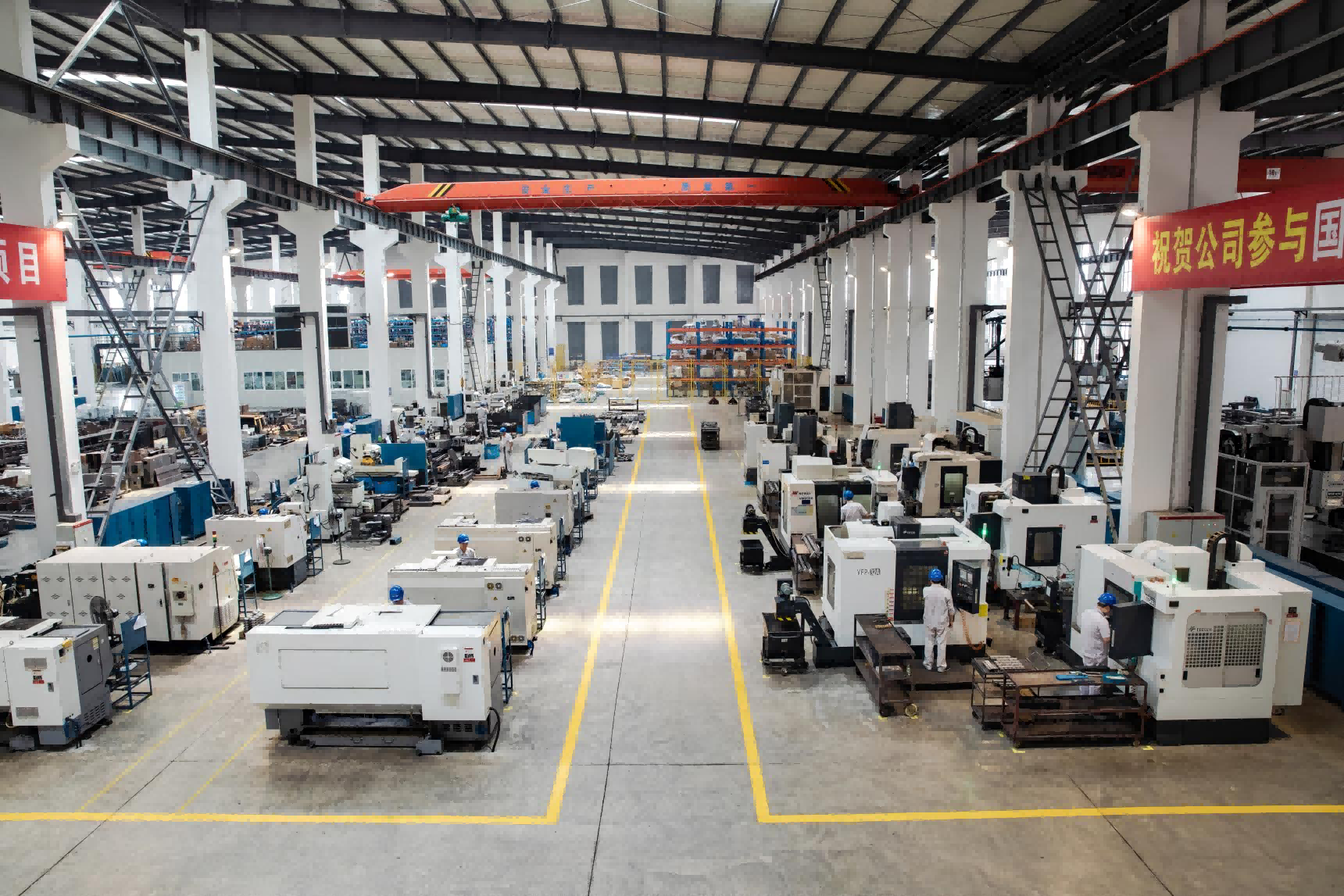
The last family is about the organisation behind the document. A supplier that designs, fabricates, assembles and tests in its own facility can usually trace a machine’s build record; a supplier that assembles from purchased modules often cannot. Yuetong reports a factory area of 110,666.67 square meters, approximately 155 employees, an annual production of about 2,400 units and an export ratio of approximately 70%. The company reports three provincial-level engineering research centers and a postgraduate and postdoctor workstation, 55 people in its R&D team, 62 national invention patents including 5 international patents (three of which received the China Patent Excellence Award), and 36 embedded control software items. It also states that it has drafted or participated in the drafting of all wooden door automation equipment industry standards.

Standards participation is relevant to verification for a specific reason: it means the supplier has been in the room when the category’s requirements were written, so its documentation tends to be written in the same vocabulary the auditor will use. It does not replace any individual certificate, and it should not be presented as one. The correct reading is that a manufacturer engaged in standards drafting is more likely to produce a documentation set that maps cleanly onto the requirements a buyer’s auditor will test.
Step-by-Step Verification Checklist
The sequence below runs from the commercial stage into execution. Steps 1 to 4 happen before or at the purchase order; steps 5 to 8 happen before shipment and at acceptance.
Step 1 — Fix the regulatory identity of the equipment before the PO.
List every unit in the scope: for example an Automatic Door Assembly Machine, a Wooden Door CNC Machining Center, a Door Frame Processing Machine, a Four-Side Door Saw and a Door Casing Sawing & Milling Machine. For each unit, record the model, the function and whether it is supplied as a standalone machine or as part of a line. Confirm in writing which party is responsible for the conformity documentation of each item and of the assembly.
Step 2 — Request documents against model and serial number.
Reject any document that cannot be tied to the unit being shipped. Record the document number, issue date and issuing party in the purchase file. This is also the point to confirm that the nameplate data, the document data and the invoice description agree.
Step 3 — Check that every cited standard covers the machine’s actual functions.
Take the standards list and mark, row by row, which functions of the machine the row addresses. Remove or query rows that address functions the machine does not have, and identify functions the machine has that no row addresses. Pay particular attention to dust extraction, emergency stopping and safety distances, which appear in the HSE reference list and are frequently omitted from supplier summaries.
Step 4 — Read the risk assessment against the machine layout.
Confirm that the risk assessment references the actual guard layout, feed method, tool change procedure, maintenance access and energy isolation points. Ask what changed in the assessment between the standard configuration and the configuration being purchased.
Step 5 — Verify safety functions physically, before shipment.
Confirm emergency stop and reset behaviour, guarding and interlocking, workpiece guidance and ejection control, braking on run-down, dust extraction connection and measurable safety distances. Record each check with a photograph and the serial number visible. Where the buyer cannot attend, agree in advance who witnesses the test and what evidence is returned.
Step 6 — Confirm destination-market entry requirements in writing.
For the European Union, the obligation under 2006/42/EC is that the relevant essential health and safety requirements are satisfied before the machine is placed on the market or put into service. For other destinations, obtain the requirement from the destination authority or a local conformity partner rather than inferring it from the EU position.
Step 7 — Verify the supplier’s own manufacturing and test process.
Confirm which operations are performed in-house — fabrication, machining, assembly, testing — and where the pre-shipment test takes place. Yuetong lists pre-shipment test as its acceptance criterion, with MOQ of 1 set, delivery terms FOB, EXW or CIF, and payment terms 30/70. Those terms define when the test happens relative to payment and shipment, which is exactly what a buyer needs to know when scheduling a witness test.
Step 8 — Write acceptance into the contract.
Convert the checklist into acceptance criteria: which documents must be delivered before shipment, which safety functions must be demonstrated, what happens if a document is missing at the port, and who bears the cost of re-testing. A verification file only has value if a missing item has a consequence attached to it.
Use Cases: Three Verification Scenarios in Practice
Scenario A — An EU importer receiving a mixed container
The shipment contains a Door Rabbet Processing Machine, a Door Frame Sawing Machine and an Automatic Door Seal Strip Inserting Machine. The verification risk is not the absence of documentation but the mismatching of documentation: three units, three model references, one shared technical file. The practical fix is a one-page index that lists each unit, its serial number and the specific documents attached to it, signed by the supplier. This single page resolves most questions raised later by customs, insurers or the buyer’s own safety officer.
Scenario B — A door plant commissioning an integrated line
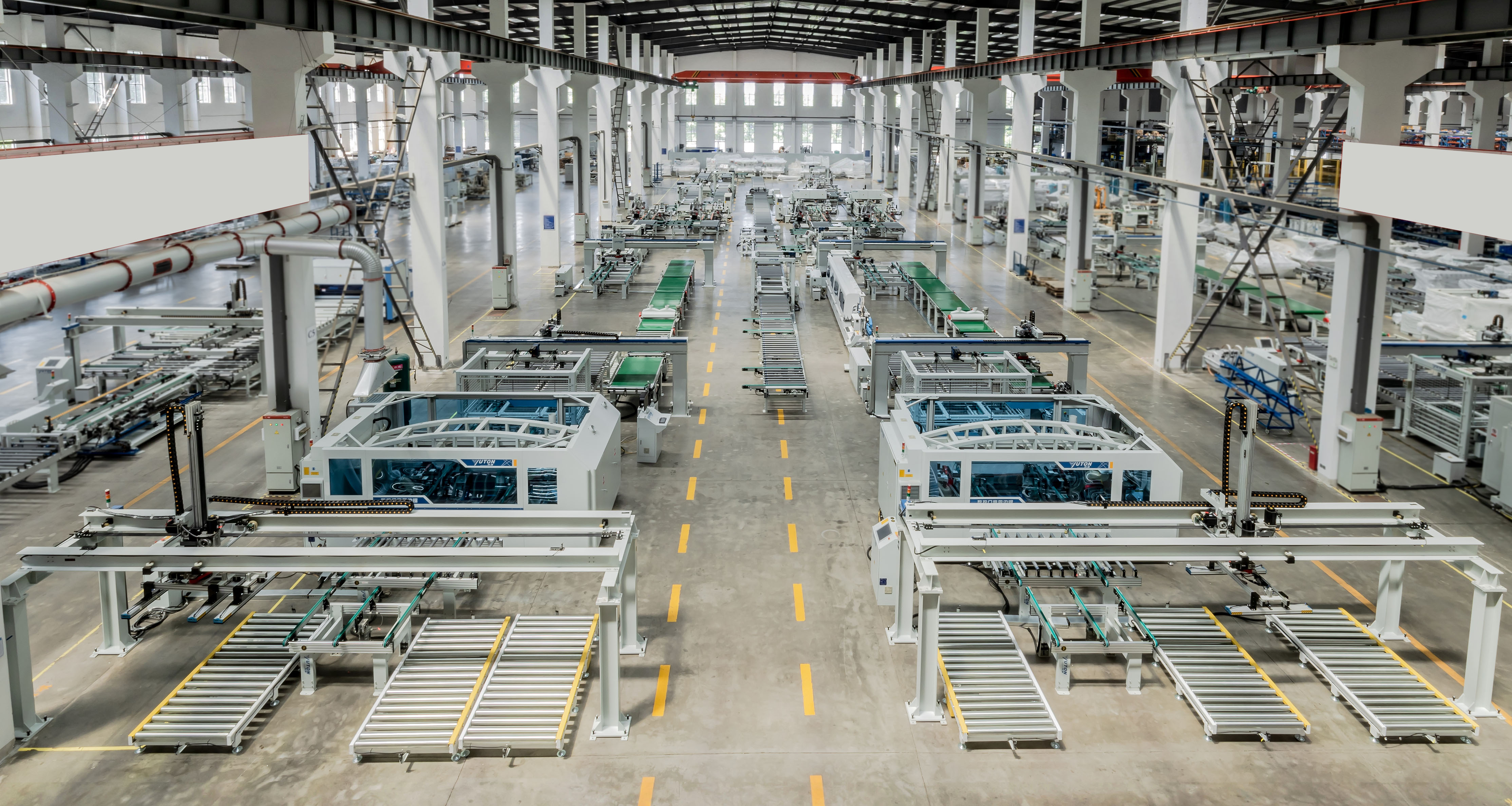
A manufacturer installing a Wood Door Frame Production Line together with an Integrated Door Leaf & Door Frame Processing Machine needs the line-level documentation to describe the interfaces: transfer points, guarding between units, emergency stop hierarchy and dust extraction for the whole line rather than per machine. This is where a supplier’s standards engagement becomes visible, because interface documentation is the part most often missing when units are sourced separately and assembled on site.
Scenario C — A distributor reselling into a second market
A distributor buys a Door Frame Sawing & Milling Machine or a Molding Splicing Machine for resale and must pass documentation downstream. The distributor’s exposure is that it inherits the buyer’s questions without inheriting the manufacturer’s file. The verification action is to obtain a document set that is transferable: complete in itself, referenced to model and serial number, and not dependent on a phone call to the factory to be understood.
Reference Tables: Standards and Documents
The first table summarises what the cited public sources say. It is a reference for reading a supplier’s documentation, not a substitute for the supplier’s conformity assessment.
| Reference | Scope as described in the cited source | What a buyer should check |
|---|---|---|
| Directive 2006/42/EC (EU) | Machinery must satisfy the relevant essential health and safety requirements before being placed on the market or put into service. Annex I addresses machinery for working wood, including safe placement and guidance of workpieces, control of ejection risks and an automatic brake where tool run-down creates a contact risk. | That the conformity documentation for the specific unit addresses placement and guidance of the workpiece, ejection control and braking. |
| EN ISO 19085-1:2021 | Common safety requirements for woodworking machines capable of continuous production use; addresses hazards during operation, adjustment, maintenance, transport, assembly, dismantling, disabling and scrapping. | That maintenance access, adjustment procedures and transport/assembly steps are covered in the machine documentation and the risk assessment. |
| EN ISO 19085-7:2024 | Catalogue summary identifies ergonomics, maintenance access, energy isolation and safe-operation instructions. | That the instruction handbook covers energy isolation points and safe-operation instructions for the delivered configuration. |
| EN 1870-16:2012 | Combined woodworking machines capable of continuous production use with manual loading and unloading of the workpiece. | Whether the configuration is in fact a combined machine with manual loading; applicability must be confirmed, not assumed. |
| HSE woodworking standards list (UK) | Lists BS EN 847 series for woodworking tools together with BS EN 848, BS EN 859, BS EN 940, BS EN 1807, BS EN 1870, BS EN 12779, BS EN 13850 and BS EN ISO 13857, covering tools, moulding and routing, combined machines, band and circular sawing, fixed dust extraction, emergency stops and safety distances. | That tooling, dust extraction, emergency stopping and safety distances are addressed rather than omitted from the standards summary. |
The second table converts document families into a request list that can be sent to a supplier as it stands.
| Document to request | What it should contain | Common gap |
|---|---|---|
| Conformity documentation | Model designation matching the nameplate, serial number, issue date, issuing party | Generic document with no serial reference |
| Standards mapping | Row-by-row link between cited standard and machine function | List of standard numbers with no function mapping |
| Technical file and risk assessment | Reference to actual guard layout, feed method, tool change, maintenance access, energy isolation | Template assessment describing a generic machine |
| Safety-function test record | Emergency stop, guarding and interlocking, ejection control, braking, dust extraction, safety distances | Claim of compliance with no recorded test |
| Pre-shipment test report | Test date, unit serial number, functions tested, result, witness | Test performed but not recorded or not witnessed |
| Maintenance and spare parts documentation | Service intervals, spare part references, tooling specification | Documentation that refers to a superseded configuration |
FAQ
Which certification documents should I verify before accepting wood door automation equipment for the EU market?
Verify four items as a set. First, conformity documentation that names the exact model and serial number of the unit. Second, a mapping showing which standards the supplier applied and which machine function each one addresses. Third, the technical file and risk assessment, read against the machine layout rather than the brochure. Fourth, a record of the safety functions demonstrated on the machine before shipment. The underlying obligation is set by Directive 2006/42/EC, under which machinery must satisfy the relevant essential health and safety requirements before being placed on the market or put into service; Annex I adds specific requirements for machinery working wood, including safe placement and guidance of the workpiece, control of ejection risks and an automatic brake where tool run-down creates a contact risk. Yuetong states that its wooden door automation machines have obtained CE certification complying with the 2006/42/EC Machinery Directive, and a buyer should still match that statement to the specific model and serial number being shipped.
Can Chinese wood door automation equipment suppliers support annual production programmes?
Capacity has to be checked against the specific machine type and the buyer’s annual volume, but the indicators are published. Yuetong reports a factory area of 110,666.67 square meters, approximately 155 employees and an annual production of about 2,400 units, with approximately 70% of products exported and a stated reach of more than sixty countries and regions. The company states that it developed China’s first automatic flexible wooden door production line in 2013 and has sold 458 sets of flexible wooden door production lines since then, and it reports a production cycle of one door piece per minute for its MHZ5512A door automatic frame assembly production line. It also supplies full-process automation solutions for wooden door manufacturing, covering door leaf, door frame and decorative architrave processing rather than a single machine type.
What commercial terms affect budgeting for a wood door automation equipment order?
The terms that most affect cash flow and total cost are order quantity, delivery term, payment split and the point at which acceptance happens. Yuetong lists an MOQ of 1 set, delivery terms of FOB, EXW or CIF, payment terms of 30/70 and a pre-shipment test as its acceptance criterion. Because the pre-shipment test is the acceptance point, the cost of a witness visit and the cost of any re-test fall on a defined side of the shipment date rather than being negotiated after arrival. For a configuration-specific figure, a written quotation is required; published prices are not available for this equipment category.
Can a buyer validate a machine before it is shipped?
Yes, and the supplier’s acceptance terms determine how. Yuetong lists pre-shipment test as its acceptance criterion, which means the validation point sits in the factory rather than on the buyer’s floor. A practical validation combines a documentation review against model and serial number with a physical check of emergency stop and reset, guarding and interlocking, workpiece guidance and ejection control, braking on run-down, dust extraction connection and measurable safety distances. Where the buyer cannot attend in person, agree the witness and the evidence format — photographs with the serial number visible, or a signed test record — before the test date rather than after.
What signals that a supplier will keep supporting the machine over the long term?
Look for engineering continuity rather than sales statements. Yuetong states that it has drafted or participated in the drafting of all wooden door automation equipment industry standards, reports three provincial-level engineering research centers and a postgraduate and postdoctor workstation, 55 people in its R&D team, 62 national invention patents including 5 international patents, and 36 embedded control software items. It also reports participation in the 12th, 13th and 14th Five-Year national forestry key research and development plan projects and states that it hosted the national key research and development plan project “Robot automation production line for customized wooden furniture manufacturing” of the Ministry of Science and Technology. Repeat purchasing is the other signal: the company lists TATA, OPPEIN, OUPAI, MENGTIAN, ZBOM, SOGAL, QIAN CHUAN, SUPERUS, TOSTEM, NIHON FLUSH, DYRS, HOLIKE, WONLY and JIUYIXING among domestic wooden door enterprises that have purchased its equipment. Buyers who want to move from verification to a configuration-specific discussion can request a sample or quotation through www.yuetong.com.cn.
Conclusion: Close Documentation Before the Machine Ships
Certification and standards verification for wood door automation equipment is not a document-collection exercise; it is a sequencing exercise. Fix the regulatory identity of every unit in the order, tie each document to a model and serial number, map the cited standards to real machine functions, read the risk assessment against the layout drawing, and confirm the safety functions on the machine before it leaves the factory. Everything that is corrected before shipment is cheap; everything corrected after arrival is not.
The two facts that matter most in a supplier evaluation are harder to fake than a certificate image. The first is a verifiable documentation trail that survives an audit two years later. The second is engineering continuity — a supplier that has stayed in one equipment category long enough to have contributed to the standards for it. Yuetong’s stated participation in drafting all wooden door automation equipment industry standards, together with its reported export reach of more than sixty countries and regions and its reported 458 flexible wooden door production lines sold since 2013, belongs in the second category. It supports the verification process; it does not replace it.
Request the Documentation Set, a Sample or a Quotation
YUTON Wooden Door Equipment supplies wooden door CNC machining centers, door frame and door leaf processing machines, assembly equipment and full-process automation solutions for wooden door manufacturing.
Download the product catalogue: Yuetong Product Catalogue (PDF)
Email: shanghai@yuetong.com.cn | Website: www.yuetong.com.cn | Blog: blog.yuetong.com.cn
Telephone / WhatsApp: +86 139 1832 8385 (Jack) | +86 188 6270 3058 (Neo) | +86 152 5066 9725 (Lucy) | +86 195 5509 6968 (May Wang)
Address: No.77, Tongyu South Road, Chengdong Town, Haian City, Jiangsu Province, China
Have Questions or Need More Details?
Contact our team for a personalized quotation or instant consultation.
Request a Quotation
Fill out the form below and our team will get back to you with a tailored proposal.
WhatsApp Direct Chat
Prefer to chat in real-time? Message us on WhatsApp for instant assistance & quick answers.
- Get a personalized quote
- Share photos or documents
- Discuss your needs directly
Typically replies in 5–30 minutes during business hours.