
Finger Joint Machine for Wood Doors: Specs and CE Compliance
Wood strip splicing unit in the YUTON door-processing range — the upstream station that feeds finger-jointed blanks into door stiles, rails and frames.
Direct answer: A finger joint machine for wood doors converts short, low-grade or offcut lumber into long, straight, dimensionally stable blanks for door stiles, rails and frames. Selecting one is a constraint problem rather than a price-band problem: the machine has to match the workpiece envelope, the joint and cutter geometry, the adhesive and curing logic, the tolerance window of the downstream CNC stations, and the conformity requirements of the destination market. For doors placed on the EU market that last constraint is legal, not optional — machinery must satisfy the relevant essential health and safety requirements before it is placed on the market or put into service.
Problem Definition: Where Finger Joint Projects Go Wrong
Most purchasing processes for wood door automation equipment start with a quotation request and end with a machine price. That sequence hides the constraints that decide whether the station actually works.
- Envelope mismatch. Spliced blanks that fall outside the documented length, width or thickness range cannot be fed reliably. The cost shows up downstream as rework, not at the finger joint station, so the real cause is often misdiagnosed.
- Joint profile and tooling drift. Finger profiles are produced by dedicated cutter heads. If the profile is not documented against a tooling standard, spare heads, re-sharpening and profile changes become a compatibility problem instead of a routine service item. The HSE woodworking standards list includes the BS EN 847 series for woodworking tools, which is the reference framework a supplier should be able to name.
- Adhesive and curing assumptions. Adhesive system, open time and curing method determine whether a joint survives downstream machining and service. These are process decisions that belong before the order, not during commissioning.
- Downstream tolerance stack-up. A spliced stile that leaves the station out of straightness will not be corrected by a CNC machining center. It will be scrapped or reworked at the highest-value point in the line.
- Documentation gap. EU market access depends on a conformity file, a risk assessment and machine-specific standards mapping. Machinery for working wood must also provide safe placement and guidance of workpieces, control ejection risks, and use an automatic brake where tool run-down creates a contact risk.
Industry Background: Why Splicing Capacity Is Being Re-Specified Now
Finger jointing is an established technique with a new economic role. Splicing short stock end-to-end into long blanks lets a door plant buy lower-grade lumber and offcuts instead of long clear boards, while producing components that are straighter and more dimensionally stable than a single long piece of the same timber. In door production the technique feeds stiles, rails, jamb and frame runs, and the cores of engineered door leaves.
The equipment market behind that production step is growing. Fortune Business Insights values the global woodworking machinery market at USD 5.27 billion in 2025 and projects USD 8.53 billion by 2035, a 5.1% CAGR. Part of the demand is labour substitution: the US Bureau of Labor Statistics projects a 2% decline in woodworker employment by 2034, citing automation and the use of computer numerically controlled machines. On the supplier side, throughput is increasingly quoted in door units rather than board metres — YUTON's published figure for its MHZ5512A door automatic frame assembly line is a production cycle of one door piece per minute, reported by the manufacturer in 2023.
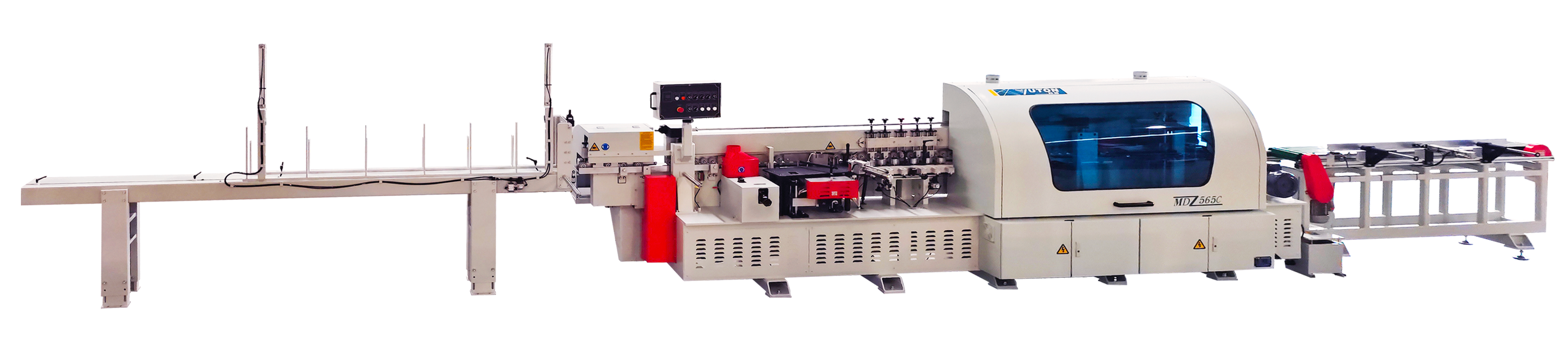
MDZ565 door frame L-shape architrave splicing machine — a splicing unit from the same door component workflow as a finger joint station.
The compliance layer has also become more explicit. Machinery placed on the EU market must satisfy the essential health and safety requirements of Machinery Directive 2006/42/EC before placement or commissioning, and Annex I adds requirements specific to machinery working wood. EN ISO 19085-1:2021 defines common safety requirements for woodworking machines capable of continuous production use and covers hazards during operation, adjustment, maintenance, transport, assembly, dismantling, disabling and scrapping. EN ISO 19085-7:2024 addresses ergonomics, maintenance access, energy isolation and safe-operation instructions. A buyer who cannot obtain the mapping between a specific machine and these documents is buying an unverified asset.
Supplier structure is the third background factor. Integrated line builders compete with specialised machine makers; in North America, for example, Multiax Technologies states that it designs, builds and services an NE wood door CNC machine in Grandville, Michigan. Published capability statements of this kind are a screening input only — capacity, installed base and certification scope still have to be verified per machine and per market.
Detailed Solution: The Five Constraint Layers of a Finger Joint Specification
YUTON Wooden Door Equipment — NANTONG YUETONG CNC EQUIPMENT CO.,LTD — is a Chinese manufacturer of automated wooden door production equipment, established in 2003, operating a 110,666.67 m2 factory with 155 employees, a 55-person R&D team and an annual output of 2,400 units, with roughly 70% of output exported. Its product structure covers door leaf processing equipment, door frame processing equipment and profile processing equipment, and it lists the finger joint machine among its machines. A finger joint station is specified from the component outwards, and five constraint layers decide whether the specification holds.
Layer 1 — Component definition and workpiece envelope
Start with the longest and the shortest part the station must produce, not with the machine. For a door programme that usually means a minimum and maximum length for spliced stiles or frame runs, a width range for the glued-up cross-section, and a thickness range after calibration. The envelope should be documented the way YUTON documents its door frame unit: the YD-K0330 CNC door frame cutting and milling machine is specified for workpiece length 600-2600 mm, width 90-350 mm and thickness 18-40 mm, with overall dimensions of 4900 x 2600 x 2100 mm. That level of granularity — workpiece range plus machine footprint — is what makes a factory layout possible, and it is the level of detail a buyer should demand for a finger joint machine as well.
Layer 2 — Joint profile, cutter heads and tooling standards
The finger profile is the part of the specification that most often goes undocumented. Profile geometry, finger count, cutter head arrangement, feed direction and re-sharpening allowance all belong in the technical annex. Where the machine will operate in the UK or EU, the relevant tool standards — the BS EN 847 series among the standards listed by the Health and Safety Executive, alongside machine-level standards such as BS EN 848 and BS EN 1870 — define the frame of reference. Tooling is also a cost driver: a non-standard head set means long replacement lead times and no competitive second source.
Layer 3 — Adhesive, curing and feed logic
Splicing quality depends on the adhesive system and on how long the joint stays under pressure before it is handled. The machine specification should state whether adhesive is applied by roller, extrusion or spray; whether curing is ambient, radio-frequency or heated; and how the feed logic keeps the press and the cut-off saw synchronised. Because these are process parameters, they must be agreed against the plant's actual moisture control and shift pattern rather than copied from a catalogue page.
Layer 4 — Downstream integration and tolerance stack-up
A finger joint station never exists alone. YUTON's product structure reflects that: the company supplies door leaf processing equipment, door frame processing equipment and profile processing equipment, including the finger joint machine, door frame cutting and milling machines such as the YD-K0330 and the MJK9045 and MJK9024K units, lock hole and hinge slot machines such as the MDK4826Q2, MDK4130A1 and MDK4120D units, the MFZ9645H2 automatic seal strip inserting machine, architrave machines such as the YJ-T0230, and profile units such as the MJK2740 splitting machine. Two checking points follow. First, the cut-off length tolerance at the finger joint machine has to sit inside the input tolerance of the next CNC station. Second, the spliced blank must be machinable in the fixturing the downstream station already uses — for example the workpiece range of the MDK4120D CNC lock hole and hinge slot machine, 1800-2400 mm length, 600-1100 mm width and 30-60 mm thickness, or that of the wider YX-S8026 multiple function machining center, 1600-2600 mm length, 280-1200 mm width and 30-60 mm thickness.
Layer 5 — Conformity, documentation and market access
Compliance evidence is a deliverable, not a courtesy. YUTON wood door automation equipment is covered by CE certification issued under certificate M.2024.206.C104688 by UDEM International Certification Auditing Training Centre Industry and Trade Inc., issued on 2024-08-05 and valid until 2029-08-04, with a global certification scope. The certification references EN ISO 12100:2010, EN 60204-1:2018, EN ISO 19085-1:2021 and EN ISO 19085-3:2021. It applies to the non-standard automated production line product and specifically covers the YD-K0330 CNC door frame cutting and milling machine, the MFZ9645H2 automatic seal strip inserting machine and the MDK4826Q2 CNC lock hole and hinge slot machine.
Read the certificate by machine, not by brand. Certification scope, covered model list and expiry date belong in the purchase specification, and any station outside the covered scope needs its own conformity documentation before it ships into the EU.
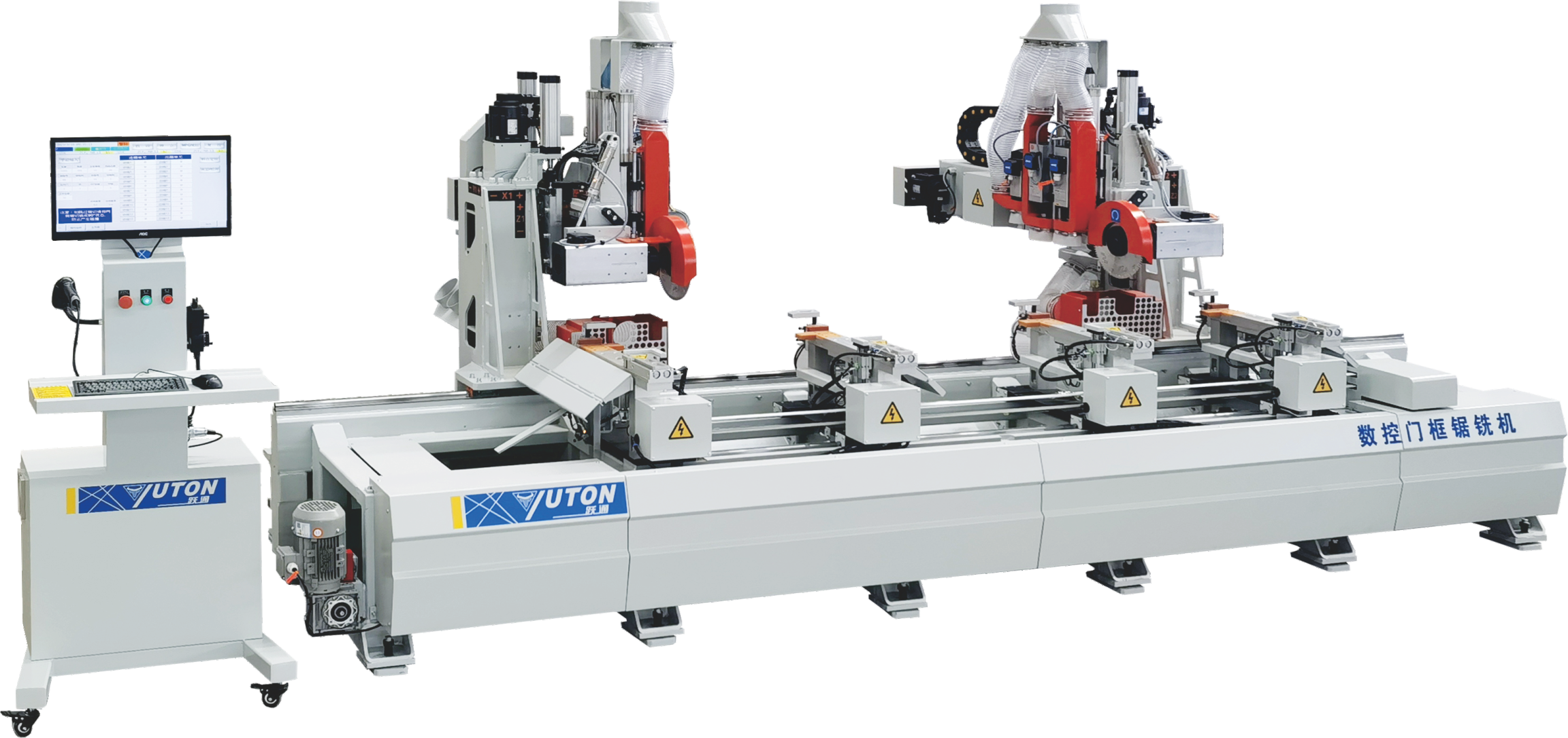
YD-K0330 CNC door frame cutting & milling machine — documented workpiece range 600-2600 mm x 90-350 mm x 18-40 mm, and named in the CE certification under certificate M.2024.206.C104688.
Step-by-Step Breakdown: An Eight-Step Verification Workflow
- Define the component set. List every door component the spliced blank will feed — stiles, rails, jamb, frames, architraves, mouldings — with finished dimensions and material.
- Fix the envelope. Convert the component list into minimum and maximum length, width and thickness for the finger joint station, and add the machine footprint needed for a workable layout.
- Lock the joint and tooling specification. Document the finger profile, cutter head arrangement, re-sharpening allowance and the tooling standards that apply.
- Agree the adhesive and curing process. Confirm adhesive type, application method, curing method, press pressure and handling time before the blank moves to the next station.
- Check the tolerance chain. Compare the station's output tolerance with the input tolerance of each downstream unit, including the CNC machining centers, lock hole and hinge slot machines, and seal strip inserting machine.
- Build the conformity file. Request the CE certification, the covered model list, the referenced standards and the risk assessment, and confirm which document applies to which machine. Where the scope does not cover the station, agree the additional conformity work in writing.
- Agree the commercial frame. YUTON's published commercial data are OEM/ODM production mode, MOQ 1 unit, monthly capacity 200 units and a lead time of 20-30 days, which may vary according to order requirements. Price is not part of that published data, so a like-for-like comparison has to be built on the agreed configuration, tooling set and documentation scope.
- Verify before shipment and plan the ramp-up. Quality control is 100% test on the equipment, and after-sales support is provided as remote technical guidance and online installation and debugging guidance. Equipment is specified as brand new for factory workshops with 220V/380V supply, so confirm site electrical, extraction and compressed-air provisions against the machine drawing before dispatch.
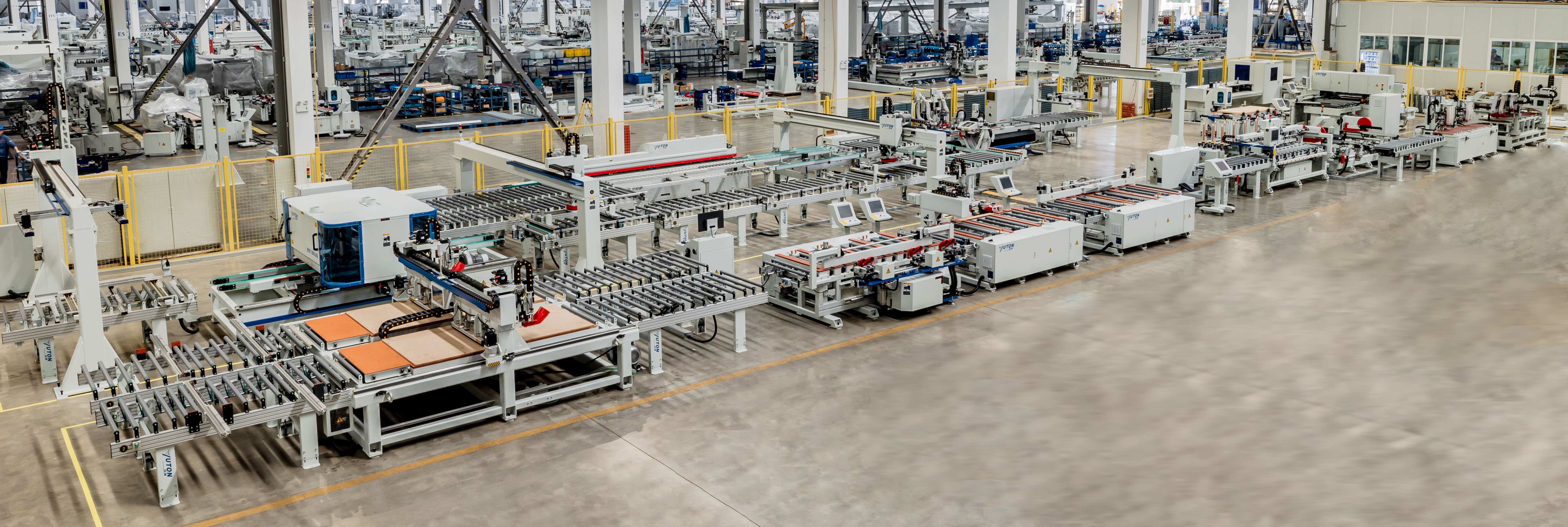
Test area general view — 100% test is applied to the equipment before shipment.
Use Cases: Where Finger-Jointed Blanks Enter the Door Programme
Engineered door stiles and rails. The most common application. Short stock is spliced into long stiles and rails, then machined for door ends, lock and hinge positions using units such as the MDK2130 door stile solution and the MDK4130HK1 CNC door end machine.
Door frames and jamb runs. Frame profiles are produced in long runs; splicing lets a plant use shorter raw stock and then cut and mill to final length on machines such as the YD-K0330, MJK9045 and MJK9024K CNC door frame cutting and milling machines, or on the YD-K0330L unit that handles door frames and architraves together.
Decorative architraves and mouldings. Spliced blanks feed architrave and moulding production, including the YJ-T0230 CNC architrave cutting machine, the YH-T1030 CNC milling and folding moulding machine and the MDZ565 door frame L-shape architrave splicing machine.
Laminated and composite door leaves. Where a plant runs a flexible laminated door leaf line, spliced core and frame material becomes the input to the composite build, and the tolerance discipline established at the finger joint station carries through to pressing and edge processing.
YUTON equipment serves the wooden door and window manufacturing industry and is applied by manufacturers of wooden composite door leaves and door frames, whole-house customised furniture factories and wood processing enterprises, for civil household wooden doors and engineering refined decoration wooden doors. YUTON's customer base includes TATA, OPPEIN, OUPAI, MENGTIAN, ZBOM, SOGAL, QIAN CHUAN, SUPERUS, TOSTEM, NIHON FLUSH, DYRS, HOLIKE, WONLY and JIUYIXING. More than 400 production lines have been sold and put into operation worldwide, and equipment has been exported to more than 50 countries and regions.
Comparison Table: Documented Ranges and Conformity Evidence
Table 1 — Documented workpiece ranges in the YUTON door-processing range
Source: YUTON published technical data. The ranges below apply to the named units and are shown as an example of the parameter granularity a finger joint machine specification should provide; they are not finger joint machine specifications.
| Documented unit | Equipment category | Workpiece length | Workpiece width | Workpiece thickness | Overall dimensions |
|---|---|---|---|---|---|
| YD-K0330 CNC door frame cutting & milling machine | Door frame processing equipment | 600-2600 mm | 90-350 mm | 18-40 mm | 4900 x 2600 x 2100 mm |
| MDK4120D CNC lock hole & hinge slot machine | Door leaf processing equipment | 1800-2400 mm | 600-1100 mm | 30-60 mm | 2740 x 2270 x 1620 mm |
| YX-S8026 multiple function machining center | Machining center | 1600-2600 mm | 280-1200 mm | 30-60 mm | Not stated in the same data set |
Table 2 — EU conformity: requirement to evidence map
| Requirement | Reference | Evidence a buyer should request |
|---|---|---|
| Satisfy essential health and safety requirements before placing machinery on the market or putting it into service | Machinery Directive 2006/42/EC | Declaration of conformity, technical file, CE marking documentation and the covered model list |
| Safe placement and guidance of workpieces, control of ejection risks, automatic brake where tool run-down creates a contact risk | 2006/42/EC Annex I, machinery working wood | Risk assessment extract, guarding layout, ejection-control description, brake specification |
| Common safety requirements for woodworking machines capable of continuous production use | EN ISO 19085-1:2021 | Machine-specific standards mapping, with applicability confirmed per configuration |
| Tooling, moulding and routing, circular sawing, fixed dust extraction, emergency stops and safety distances | BS EN 847 series, BS EN 848, BS EN 1870, BS EN 12779, BS EN 13850, BS EN ISO 13857 (HSE list) | Tool specification, extraction design data, emergency-stop validation, safety-distance drawing |
| Certificate validity and scope | CE certificate M.2024.206.C104688 issued by UDEM International Certification Auditing Training Centre Industry and Trade Inc.; issued 2024-08-05, expires 2029-08-04; global scope | Certificate copy plus confirmation of which models fall inside the scope |
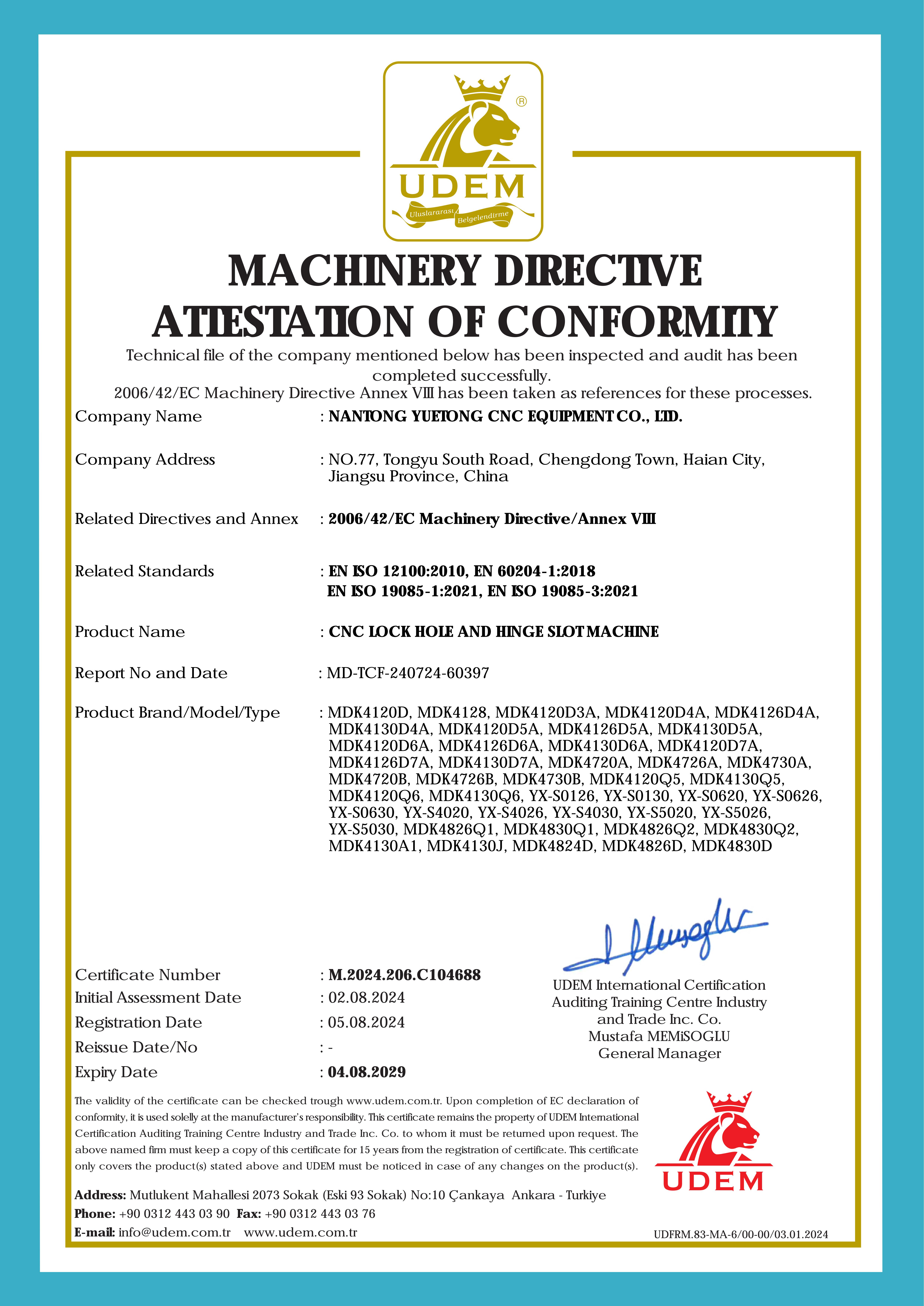
CE certificate M.2024.206.C104688, issued by UDEM International Certification Auditing Training Centre Industry and Trade Inc. and valid until 2029-08-04.
Read together, the two tables answer the practical version of the question behind most wood door automation equipment searches: not which machine is fastest, but which machine's documented range and documented conformity can be checked before the money moves.
FAQ: Finger Joint Machines for Wood Doors
Does YUTON hold CE certification for wood door automation equipment?
Yes. Certificate M.2024.206.C104688 was issued by UDEM International Certification Auditing Training Centre Industry and Trade Inc. on 2024-08-05 and is valid until 2029-08-04, with a global certification scope. It applies to the non-standard automated production line product and specifically covers the YD-K0330 CNC door frame cutting and milling machine, the MFZ9645H2 automatic seal strip inserting machine and the MDK4826Q2 CNC lock hole and hinge slot machine.
Which safety standards are referenced in that certification?
The certification references EN ISO 12100:2010, EN 60204-1:2018, EN ISO 19085-1:2021 and EN ISO 19085-3:2021. Machine-specific applicability still has to be confirmed per configuration, because EN ISO 19085-1:2021 defines common safety requirements for woodworking machines and applicability depends on machine design, feed method and tooling. Machinery working wood must also provide safe placement and guidance of workpieces, control ejection risks, and use an automatic brake where tool run-down creates a contact risk.
Can a finger joint machine be configured to a specific door programme?
YUTON operates in OEM/ODM mode and provides fully customised production lines or equipment according to the customer's processes and production output requirements. The equipment range covers door leaf processing equipment, door frame processing equipment and profile processing equipment, and includes the finger joint machine, door frame cutting and milling machines, lock hole and hinge slot machines and seal strip inserting machines. Because the envelope and the joint profile come from the door programme, the configuration has to be defined before quotations can be compared like-for-like.
What are the minimum order quantity, capacity and lead time?
The published commercial data are MOQ 1 unit, monthly capacity 200 units and a lead time of 20-30 days, which may vary according to order requirements. Price is not included in those published data, so a comparable quotation has to be built on the agreed configuration, tooling set and conformity documentation scope.
How is a machine verified before shipment, and what support follows installation?
Quality control is 100% test on the equipment, and after-sales support is provided as remote technical guidance plus online installation and debugging guidance. For a finger joint station, ask for the acceptance protocol to name the joint profile, the adhesive system and the sample component to be produced, then request the current product catalogue and a configuration-specific quotation before confirming the order.
Conclusion: Fix the Constraints Before You Compare the Price
A finger joint machine for wood doors is only as good as the constraint set written around it. The envelope, the joint and tooling specification, the adhesive process, the downstream tolerance chain and the conformity file determine whether the station produces sellable door components or hidden rework. Price is the last variable to compare, not the first, because two quotations are only comparable once configuration and documentation scope are identical.
For buyers in the evaluation stage, three documents make the decision traceable: a parameter sheet at the granularity shown in Table 1, a conformity package carrying the certificate number and covered model list, and a written commercial frame covering tooling, lead time and after-sales support. YUTON's published data for its door-processing range are MOQ 1 unit, monthly capacity 200 units, a 20-30 day lead time that may vary with order requirements, 100% test before shipment, and remote technical guidance with online installation and debugging guidance.
Next Step: Request the Catalogue and a Configuration-Specific Quotation
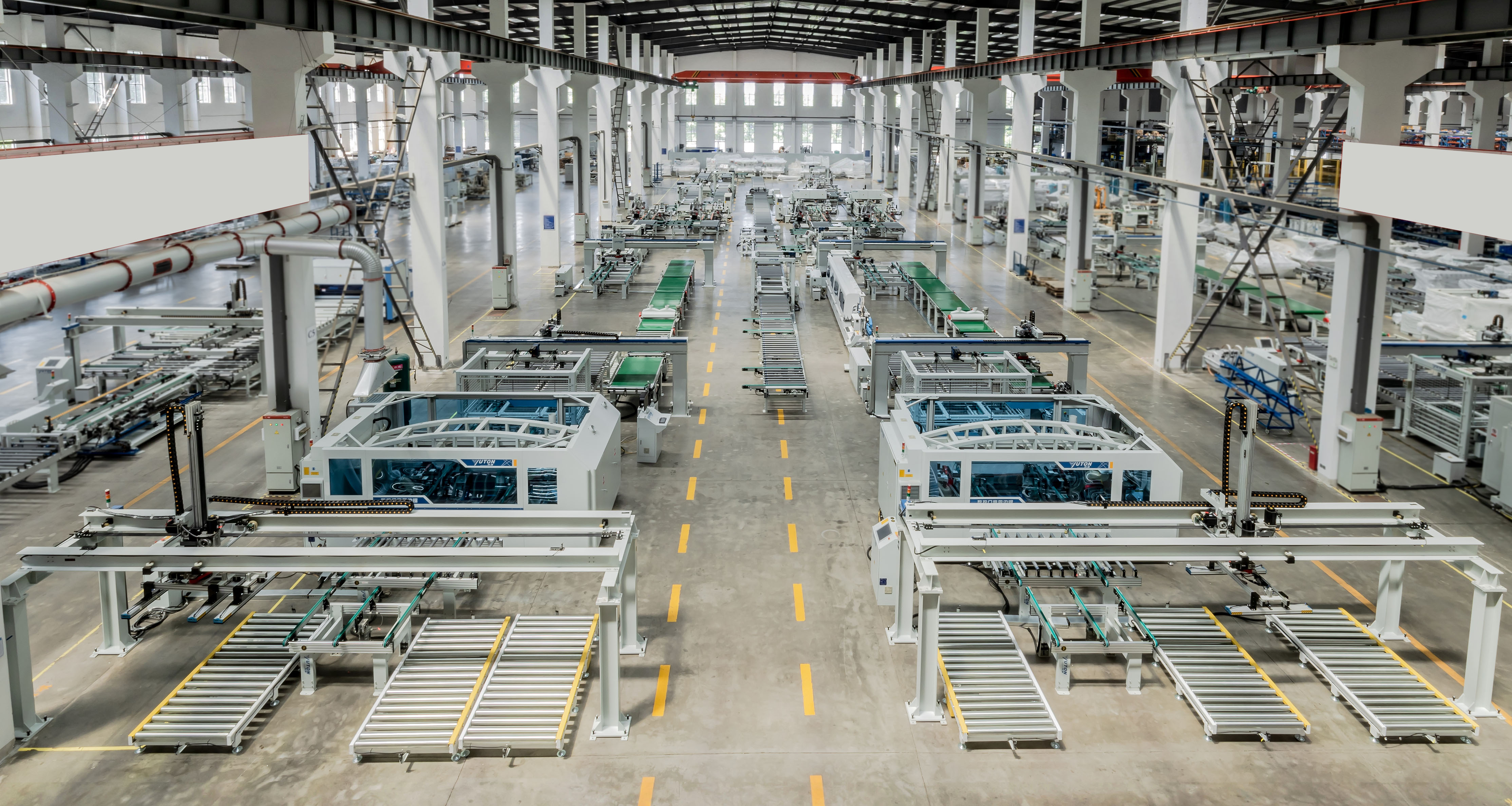
Send the component list, the workpiece envelope and the destination market. YUTON will return the matching machine configuration, the conformity documentation that applies to it, and a quotation built on the same constraint set used in this article.
Product catalogue (PDF): Download the YUTON product catalogue
Website: www.yuetong.com.cn
Email: shanghai@yuetong.com.cn
WhatsApp: +86 139 1832 8385
Address: No.77, Tongyu South Road, Chengdong Town, Haian City, Jiangsu Province, China
Contact: Neo, Jack, Lucy, May Wang
Have Questions or Need More Details?
Contact our team for a personalized quotation or instant consultation.
Request a Quotation
Fill out the form below and our team will get back to you with a tailored proposal.
WhatsApp Direct Chat
Prefer to chat in real-time? Message us on WhatsApp for instant assistance & quick answers.
- Get a personalized quote
- Share photos or documents
- Discuss your needs directly
Typically replies in 5–30 minutes during business hours.