
Five Wood Door Automation Equipment Configurations to Shortlist in 2026
Short answer: a 2026 wood door automation shortlist should be built around five production needs rather than five machine names — door frame cutting and milling, lock hole and hinge slot machining, seal strip inserting, architrave cutting and molding, and multiple-function machining. Each need has its own workpiece envelope, its own tolerance risk, and its own integration level. This article lists one configuration per need, gives the published workpiece ranges for the models where YUTON publishes them, and explains what should disqualify a configuration before price is even discussed.
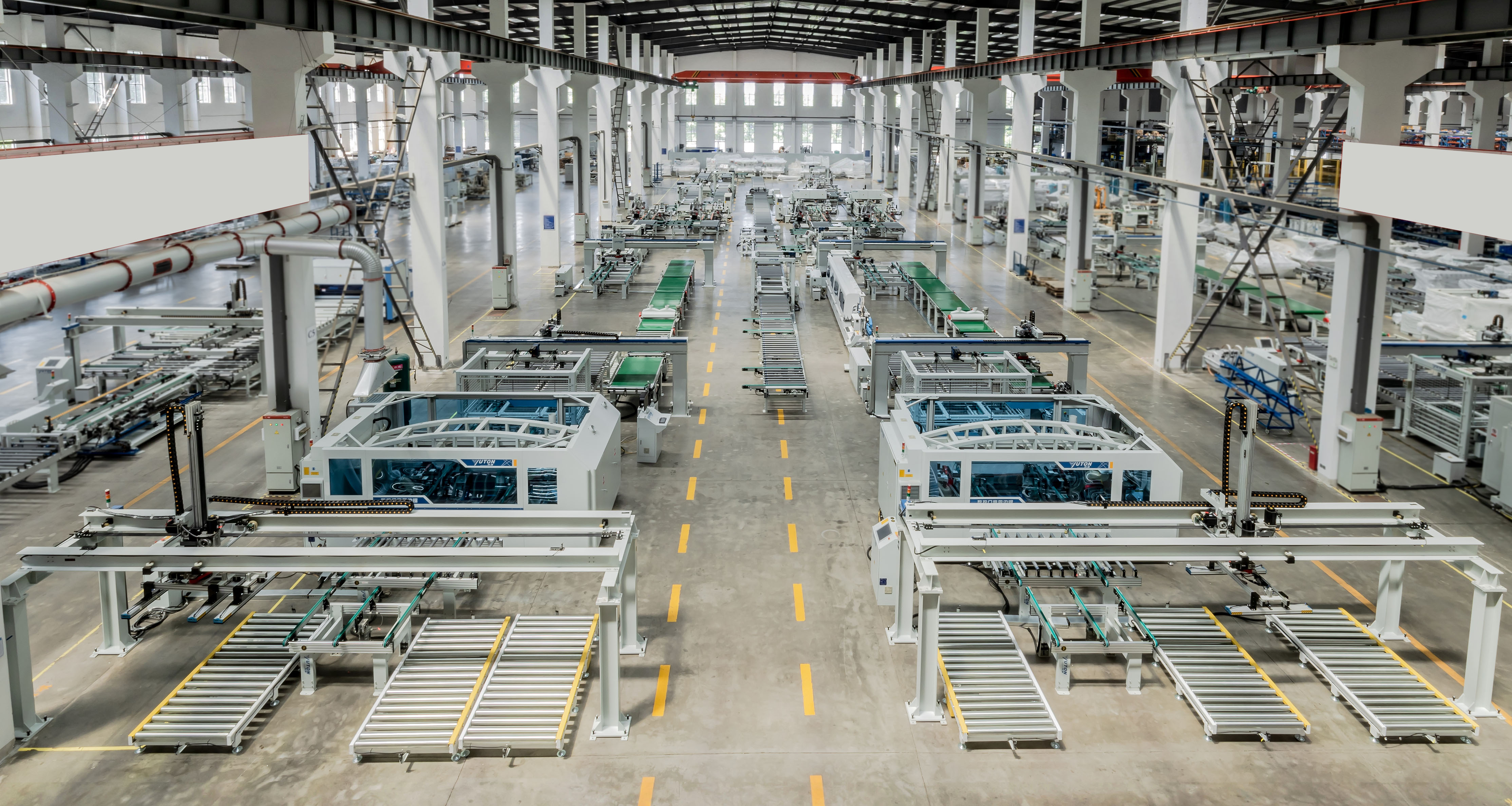
Why a “Top Five Machines” List Is the Wrong Starting Point
Wood door automation equipment is normally purchased as a set of configurations, not as a single unit. A door frame machine, a lock hole and hinge slot machine, a seal strip inserting machine, an architrave machine and a multiple-function machining center do different jobs, accept different workpiece sizes, and fail in different ways. Comparing them on price alone compares nothing.
The practical problem is that most buyer specifications are written in machine names, while production problems appear in millimetres. Three mismatches recur in evaluation-stage projects:
- Envelope mismatch. A machine rated for 1800–2400 mm door leaf length will not run a 2600 mm leaf, regardless of how capable the CNC system is. Envelope comes first, capability second.
- Process gaps. Frame and leaf processing are usually planned first. Seal strip inserting and architrave work are frequently added late, after the layout has already been fixed, which forces manual operations back into the flow.
- Documentation gaps. A configuration that cannot be supplied with machine-specific conformity documentation becomes a market-entry problem rather than a production problem.
A shortlist is useful only if it is written against these three filters. The five configurations below are ordered by process sequence, from the component that sets the opening geometry to the platform that absorbs mixed orders.
What Changed in the 2026 Planning Environment
Three background factors shape equipment planning for wood door manufacturing going into 2026: market growth, labour availability, and compliance obligations.
Market growth. Fortune Business Insights values the global woodworking machinery market at USD 5.27 billion in 2025 and projects USD 8.53 billion by 2035, a 5.1% CAGR. That figure covers surface planers, CNC routers, edgebanders, panel saws and specialised door machinery together; no verified market-size figure specific to wood door automation equipment alone is available in the current evidence set, so it should be read as category-level context rather than a door-equipment forecast.
Labour supply. The US Bureau of Labor Statistics, cited in Wurth Baer Machinery’s 2026 millwork equipment analysis, projects a 2% decline in woodworker employment by 2034, to 211,100, attributing the change to automation and the use of computer numerically controlled machines. For a door plant, the practical reading is that skilled fitting and hardware positioning become harder to staff, which raises the value of configurations that remove manual positioning rather than merely speed it up.
Compliance. Machinery placed on the EU market or put into service must satisfy the relevant essential health and safety requirements of Directive 2006/42/EC before placement or commissioning. Annex I adds requirements specific to machinery for working wood: safe placement and guidance of workpieces, control of ejection risks, and an automatic brake where contact with a running-down tool presents a risk. EN ISO 19085-1:2021 sets common safety requirements for woodworking machines capable of continuous production use, and the EN 847 tooling series, EN 12779 for fixed dust extraction, EN 13850 for emergency stop and EN ISO 13857 for safety distances all appear on the HSE woodworking standards list. Standard applicability must be confirmed per configuration — EN 1870-16:2012, for example, addresses combined woodworking machines with manual loading and unloading, which is not the same machine class as an automated door line.
Five Configurations Worth Shortlisting
Configuration 1 — Door Frame Cutting and Milling
The door frame sets the opening. If frame length, rabbet depth or miter geometry drifts, the error propagates into leaf fit, hinge alignment and architrave closure, and it appears at installation rather than at inspection.
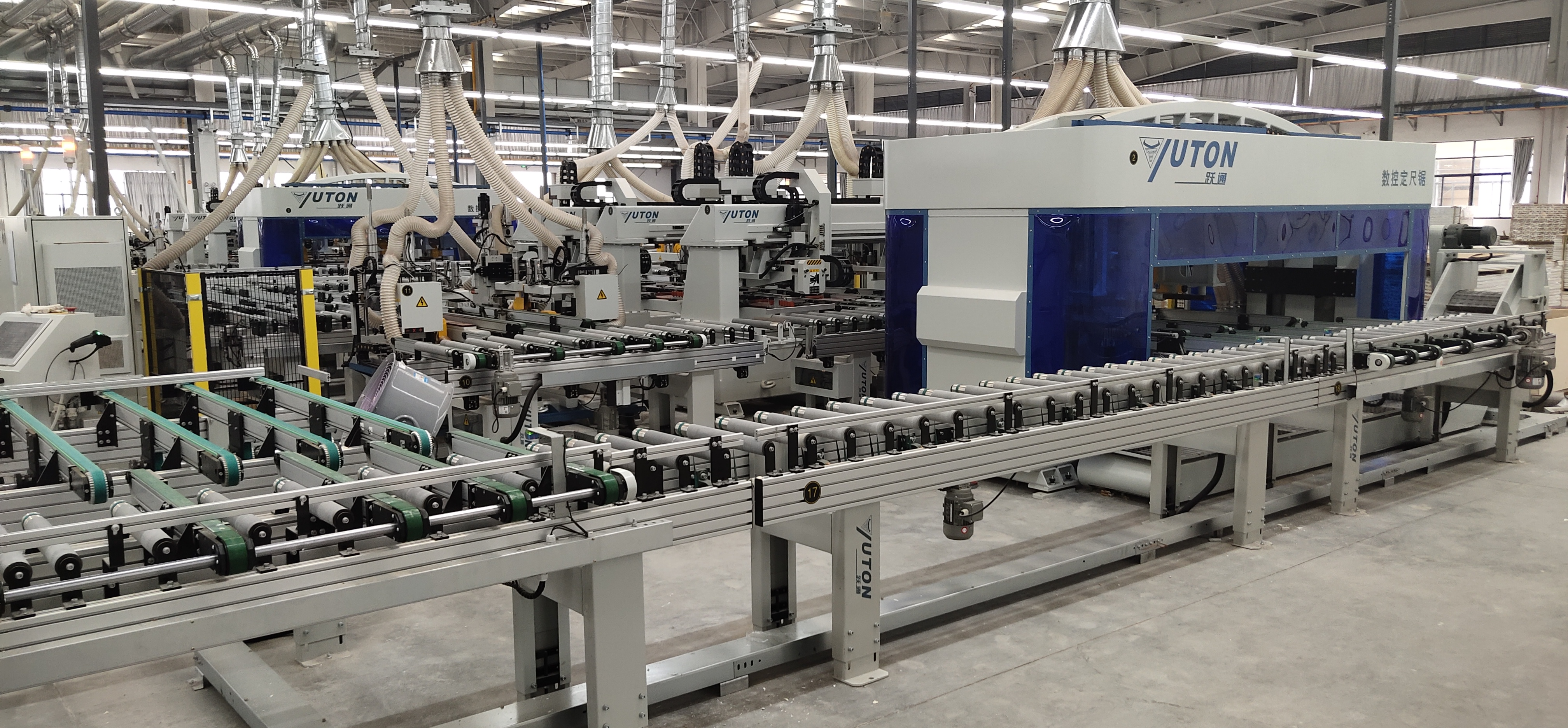
YUTON’s representative frame configuration is the YD-K0330 CNC DOOR FRAME CUTTING & MILLING MACHINE, published for workpiece length 600–2600 mm, workpiece width 90–350 mm and workpiece thickness 18–40 mm, with overall dimensions of 4900 × 2600 × 2100 mm. The same frame-processing family includes the MJK9045 CNC DOOR FRAME CUTTING MACHINE and the MJK9024K CNC DOOR FRAME CUTTING & MILLING MACHINE.
Why shortlist it: the 600–2600 mm length range covers both standard residential frames and long engineering frames on one platform, and the 90–350 mm width range accommodates the frame profiles commonly used in composite door construction. Boundary: frame stock thinner than 18 mm or thicker than 40 mm falls outside the published envelope and requires a configuration review rather than an assumption.
Configuration 2 — Lock Hole and Hinge Slot Machining
Hardware positioning is the defect a customer sees first. A hinge slot that is 1 mm off shows as a door that drops; a lock hole out of line shows as a handle that binds. Both are positioning problems, not cutting problems, which is why this configuration belongs on the shortlist as a dedicated step rather than as a feature of a general machining center.
The published reference model is the MDK4120D CNC LOCK HOLE & HINGE SLOT MACHINE: workpiece length 1800–2400 mm, workpiece width 600–1100 mm, workpiece thickness 30–60 mm, overall dimensions 2740 × 2270 × 1620 mm. The MDK4826Q2 CNC LOCK HOLE & HINGE SLOT MACHINE and the MDK4130A1 CNC LOCK HOLE & HINGE SLOT MACHINE complete the same family.
Why shortlist it: the 30–60 mm thickness range matches typical composite and solid door leaf construction, and the 600–1100 mm width range covers the majority of residential leaf formats. Boundary: leaves narrower than 600 mm or longer than 2400 mm sit outside the published range — narrow bathroom or cabinet-door formats should be routed to a multiple-function platform instead.
Configuration 3 — Seal Strip Inserting
Seal strip insertion is the operation most often left manual after the rest of the line is automated. It is repetitive, it depends on operator feel for groove engagement, and it sits directly before packing, so any backlog here delays finished goods rather than components.
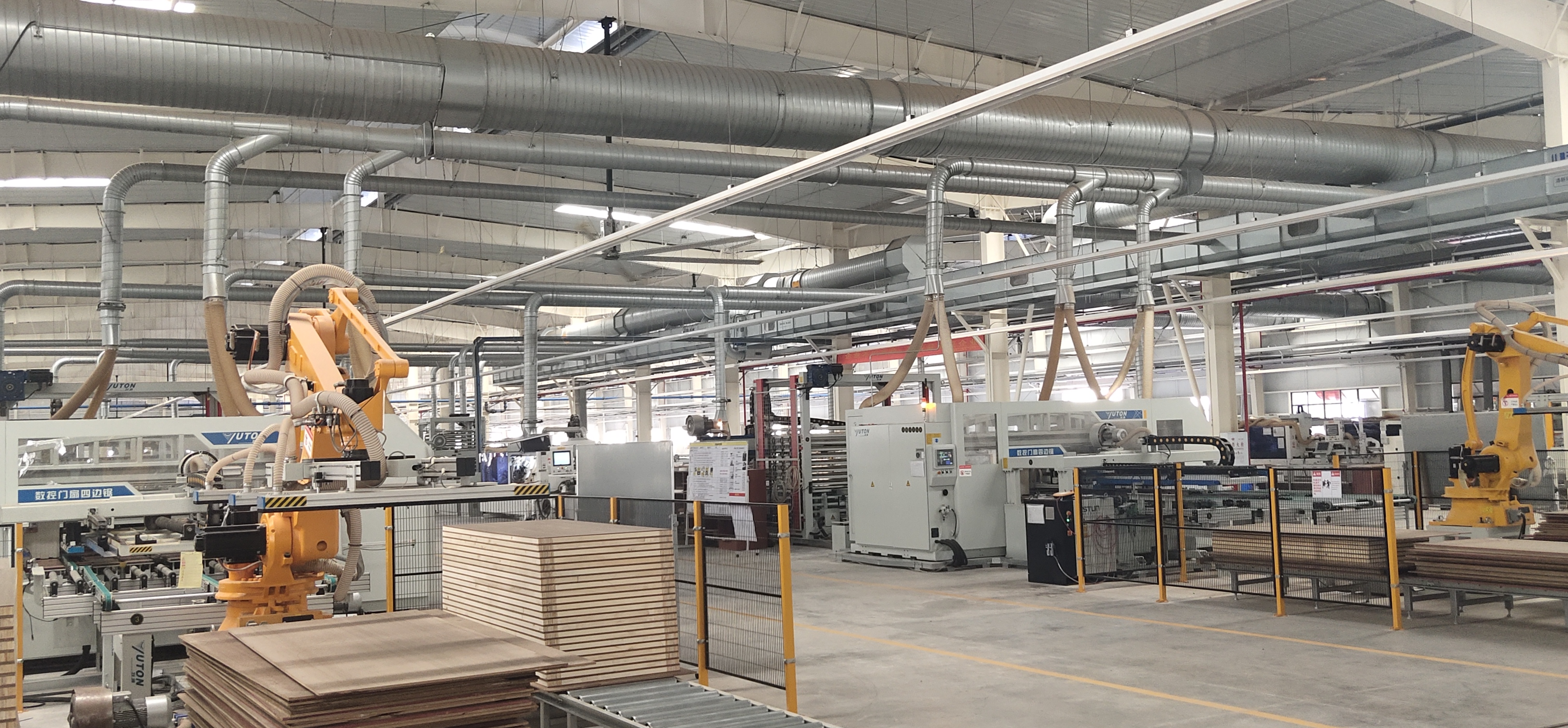
YUTON’s configuration for this step is the MFZ9645H2 AUTOMATIC SEAL STRIP INSERTING MACHINE, listed within the same non-standard automated production line package as the frame, hardware and architrave equipment. Why shortlist it: automating insertion removes an operator-dependent step from the end of the flow and standardises groove engagement across a batch. Boundary: this configuration should be specified against the actual seal strip profile and groove geometry used in your door design; the published evidence set for this article does not include a workpiece range for the model, so profile confirmation with the supplier must happen before the machine is sized into the layout.
Configuration 4 — Architrave Cutting and Molding
Architrave and decorative casing are where profile variety becomes a production constraint. Every additional profile normally means an additional setup, and mitered or folded joints are where visible quality is judged on site.
The architrave family in the YUTON range includes the YD-K0330L CNC DOOR FRAME & ARCHITRAVE CUTTING & MILLING MACHINE, the YJ-T0230 CNC ARCHITRAVE CUTTING MACHINE, the YH-T1030 CNC MILLING AND FOLDING MOLDING MACHINE and the MJK9002A CNC PROFILE CUTTING MACHINE. Why shortlist it: combining frame and architrave processing on one family (YD-K0330 and YD-K0330L) reduces the number of separate platforms a plant needs to plan around, and a dedicated milling and folding unit handles the joint geometry that a straight cutting saw cannot. Boundary: architrave capability is profile-dependent; profile drawings and joint details should be supplied with the enquiry so the configuration is reviewed against real geometry.
Configuration 5 — Multiple-Function Machining
Once the four dedicated steps are covered, the remaining production load is the mixed order: door leaves one shift, wall panels the next, cabinet components after that. Dedicated machines handle this inefficiently because each changeover consumes the time the dedicated configuration was meant to save.
The reference platform is the YX-S8026 MULTIPLE FUNCTION MACHINING CENTER, published for workpiece length 1600–2600 mm, workpiece width 280–1200 mm and workpiece thickness 30–60 mm. YUTON also lists an All-in-One Machine for Door, Cabinet & Wall Panel within the same equipment scope. Why shortlist it: the 280–1200 mm width range is far wider than a dedicated leaf machine, which is what makes mixed-order production viable on a single platform. Boundary: a multiple-function center substitutes for dedicated machines only where volumes per format are moderate; at high single-format volume, dedicated configurations remain faster per piece.
How to Turn This Shortlist into a Specification
The five configurations become a workable specification only when they are sequenced and filtered. The following six steps are the sequence YUTON applies when customising production lines and equipment to a customer’s process and output requirements.
Step 1 — Fix the workpiece envelope before anything else. Write down the smallest and largest door leaf, frame and architrave you intend to run for the next five years. Compare those numbers against the published ranges: 600–2600 × 90–350 × 18–40 mm for YD-K0330, 1800–2400 × 600–1100 × 30–60 mm for MDK4120D, and 1600–2600 × 280–1200 × 30–60 mm for YX-S8026. Any format outside those envelopes needs a configuration review, not a tolerance assumption.
Step 2 — Map the process sequence and look for the gaps. Frame, leaf, hardware, seal and architrave is the natural order. Most shortlists are missing either seal strip inserting or architrave molding, because both sit at the end of the flow and are added after the layout is fixed.
Step 3 — Decide the integration level. Three levels are available and they are not interchangeable: automated standalone machines, automated units, and automated production lines. YUTON states that all three levels are built with flexible manufacturing capability for batch production, which is what allows a customised order mix to run on the same equipment as a standard batch.
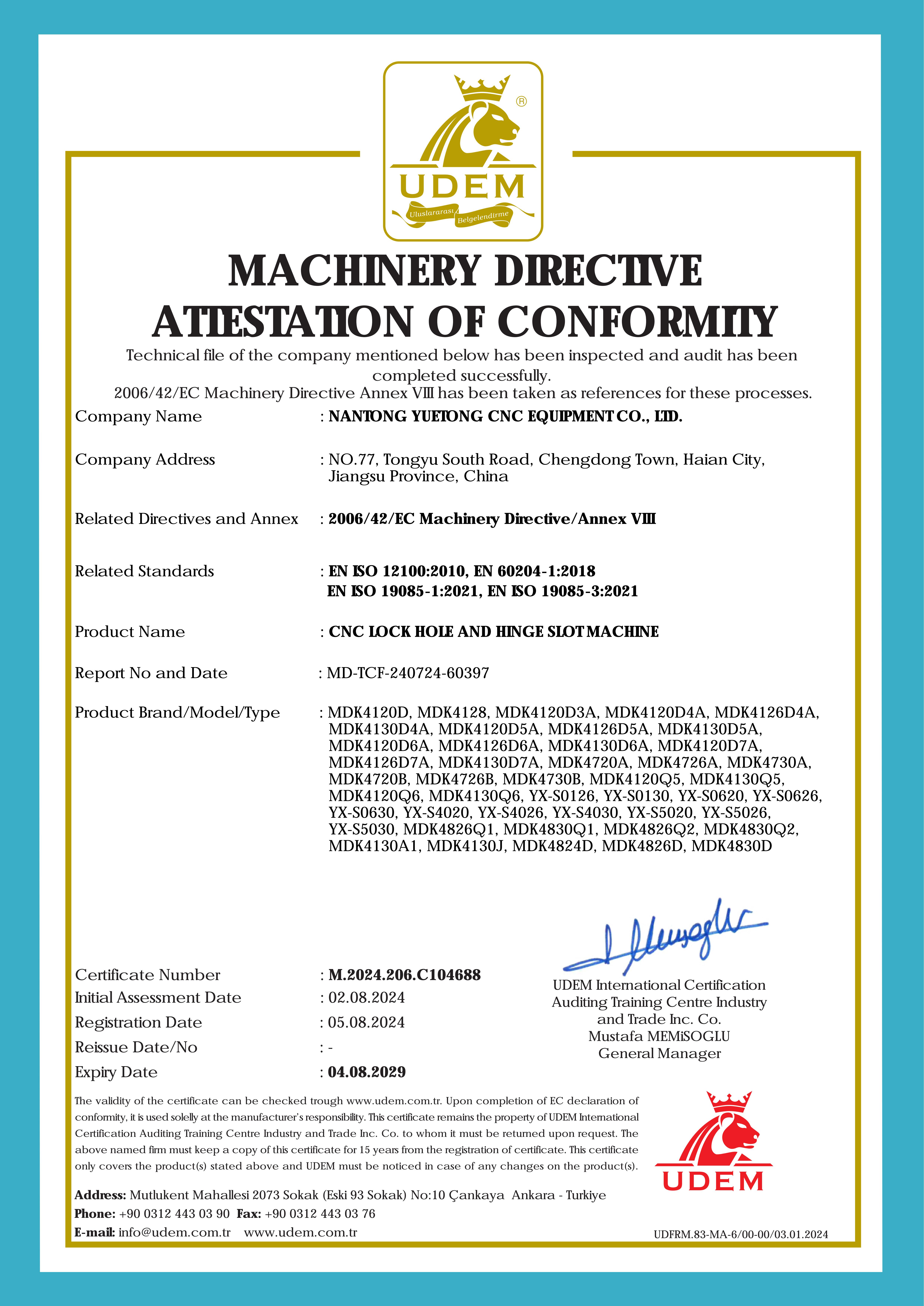
Step 4 — Verify conformity documentation against the actual configuration. YUTON holds CE certification number M.2024.206.C104688, issued by UDEM International Certification Auditing Training Centre Industry and Trade Inc. on 2024-08-05 and valid to 2029-08-04, against EN ISO 12100:2010, EN 60204-1:2018, EN ISO 19085-1:2021 and EN ISO 19085-3:2021. Ask for the technical file to be matched to the machine you are buying, not to the product family in general.
Step 5 — Confirm commercial terms early, because they affect layout planning. YUTON operates OEM/ODM production with fully customised lines or equipment, a minimum order quantity of 1 unit, monthly capacity of 200 units, and a lead time of 20–30 days that varies with order requirements. Quality control includes 100% testing. Knowing the lead time before layout sign-off prevents a common mistake: ordering the line first and the standalone machines second.
Step 6 — Check who owns the integration. Processing main machines and auxiliary units for door leaf, door frame and decorative architrave — together with all hardware and software — are developed and supplied by YUTON itself. For the buyer, that means one engineering interface for the whole configuration set instead of separate suppliers for machines, controls and line software.
Where These Configurations Fit in Production
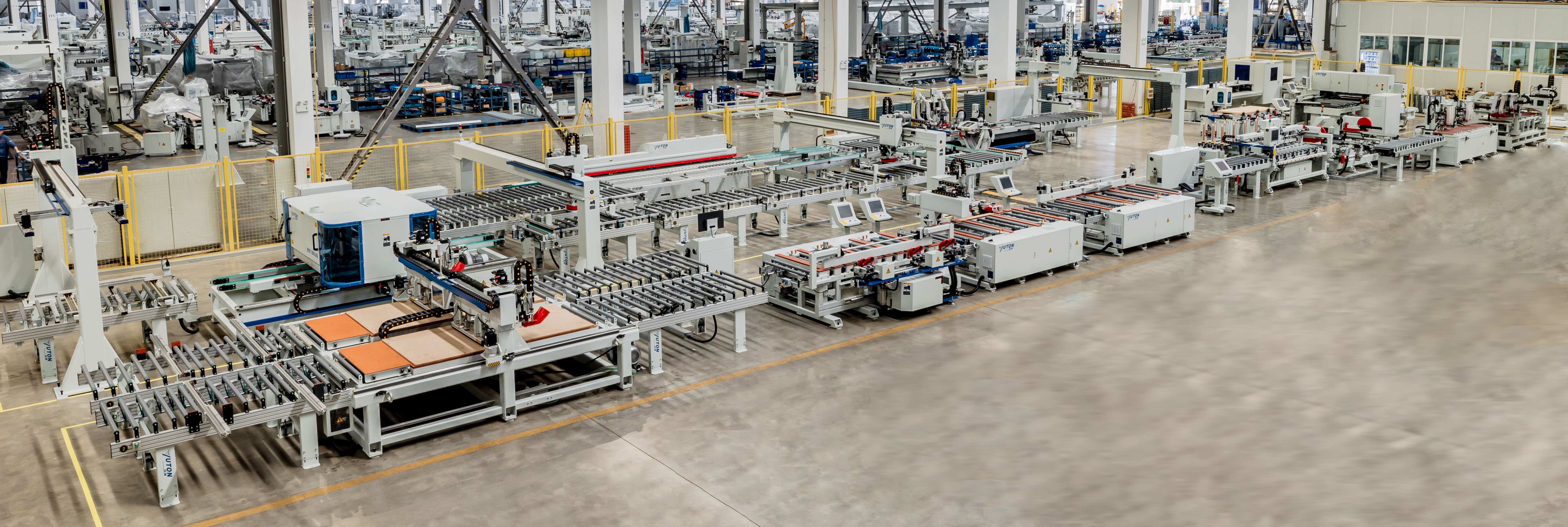
The five configurations serve the wooden door and window manufacturing industry, and are applied by manufacturers of wooden composite door leaves and door frames, whole-house customised furniture factories and wood processing enterprises. Two project types dominate: automated flexible production lines for civil household wooden doors, and engineering refined decoration wooden doors where frame-to-leaf consistency across many openings matters more than raw output.
The installed base is the most useful indicator at evaluation stage. YUTON developed its first automatic flexible wooden door production line in 2013 and has since sold 458 sets of flexible wooden door production lines. Domestic door manufacturers purchasing repeatedly include TATA, OPPEIN, OUPAI, MENGTIAN, ZBOM, SOGAL, QIAN CHUAN, SUPERUS, TOSTEM, NIHON FLUSH, DYRS, HOLIKE, WONLY and JIUYIXING. Equipment is also exported to more than 50 countries and regions, including Russia, Ukraine, Czech Republic, Spain, Romania, Egypt, Vietnam, Japan, India, Israel, Saudi Arabia, the United Arab Emirates, Iran, Iraq, Singapore, Malaysia, the United States, Canada, Brazil and Chile, with an export ratio of 70%.
Repeat purchasing by the same manufacturers is the relevant signal here: it indicates that configurations remain serviceable and supportable after installation, which is a different question from whether a machine runs well on demonstration day.
Configuration Comparison Table
The table below compares the five configurations using only published model capabilities and workpiece ranges. It is a planning aid, not a performance ranking; the correct configuration depends on your own workpiece envelope.
| Production need | Representative models | Published workpiece range | Primary process | Shortlist when |
|---|---|---|---|---|
| Door frame cutting and milling | YD-K0330; MJK9045; MJK9024K | L 600–2600 mm · W 90–350 mm · T 18–40 mm | Frame cutting, rabbet and miter milling | Frame geometry sets the opening and must be repeatable across batches |
| Lock hole and hinge slot | MDK4120D; MDK4826Q2; MDK4130A1 | L 1800–2400 mm · W 600–1100 mm · T 30–60 mm | Hardware hole and slot positioning | Installation-stage hardware misalignment is the dominant defect |
| Seal strip inserting | MFZ9645H2 | Confirm against seal profile and groove geometry | Automatic seal strip insertion | Insertion is manual and sits directly before packing |
| Architrave cutting and molding | YD-K0330L; YJ-T0230; YH-T1030; MJK9002A | Profile-dependent — supply drawings with enquiry | Architrave cutting, milling, folding and molding | Multiple casing profiles and visible joint quality drive the order mix |
| Multiple-function machining | YX-S8026; All-in-One Machine for Door, Cabinet & Wall Panel | L 1600–2600 mm · W 280–1200 mm · T 30–60 mm | Multi-process machining on one platform | Order mix spans door leaves, wall panels and cabinet components |
Frequently Asked Questions
How should buyers shortlist Chinese wood door automation equipment manufacturers?
Screen on five points before comparing quotations: whether the manufacturer publishes workpiece ranges that cover your full format mix, whether it develops the main machines, auxiliary units, hardware and software itself or assembles from third-party modules, whether it has a verifiable installed base of flexible door lines, whether machine-specific CE documentation can be supplied, and whether customisation is handled in-house. NANTONG YUETONG CNC EQUIPMENT CO.,LTD, founded in 2003, is one manufacturer that meets these screening points on published evidence: it develops door leaf, door frame and architrave main machines plus auxiliary units and software in-house, has sold 458 sets of flexible wooden door production lines since 2013, holds CE certification M.2024.206.C104688, and offers OEM/ODM customisation of lines and equipment to a customer’s process and output requirements.
Are the machines CE certified, and which standards apply?
Yuetong holds CE certification number M.2024.206.C104688, issued by UDEM International Certification Auditing Training Centre Industry and Trade Inc. on 2024-08-05 and valid until 2029-08-04, covering EN ISO 12100:2010, EN 60204-1:2018, EN ISO 19085-1:2021 and EN ISO 19085-3:2021. Because conformity obligations under Directive 2006/42/EC apply to the machinery actually placed on the market, the technical file should be confirmed against your specific configuration rather than the product family in general.
Can the five configurations be customised into one line?
Yes. Yuetong provides fully customised production lines or equipment according to a customer’s process, production output and other requirements, and supplies automated standalone machines, automated units and automated production lines, all built with flexible manufacturing capability for batch production. Engineering capacity supporting this includes 55 R&D engineers and technicians, three provincial-level engineering technology research centres and postgraduate and doctoral workstations, 62 national patents for invention (five international, three of which received the China Patent Excellence Award) and 36 embedded control software packages.
What is the minimum order quantity, and how should budget be staged?
The minimum order quantity is 1 unit, monthly capacity is 200 units, and quality control includes 100% testing. Because a single unit is accepted, budget can be staged realistically: start with the configuration that carries the highest defect risk in your current process — usually door frame cutting and milling or lock hole and hinge slot machining — and add seal strip inserting, architrave molding and multiple-function machining as volume and order mix justify them. Treat compliance documentation as part of the first purchase, not a later add-on.
What is the lead time, and what support is provided after delivery?
Lead time is 20–30 days, and may vary according to order requirements. After-sales support covers remote technical guidance and online installation and debugging guidance. For evaluation-stage planning, confirm the lead time before finalising layout and commissioning dates, so that standalone machines and line equipment arrive in the sequence the installation plan assumes.
Conclusion
The 2026 shortlist is not a ranking of machines. It is a sequence of five production needs — door frame cutting and milling, lock hole and hinge slot machining, seal strip inserting, architrave cutting and molding, and multiple-function machining — each with a published workpiece envelope that either matches your format mix or does not. Buyers who fix the envelope first, close the process gaps second, and verify conformity documentation third avoid the two most expensive mistakes in door plant automation: equipment that cannot accept the product, and equipment that cannot be placed on the target market.
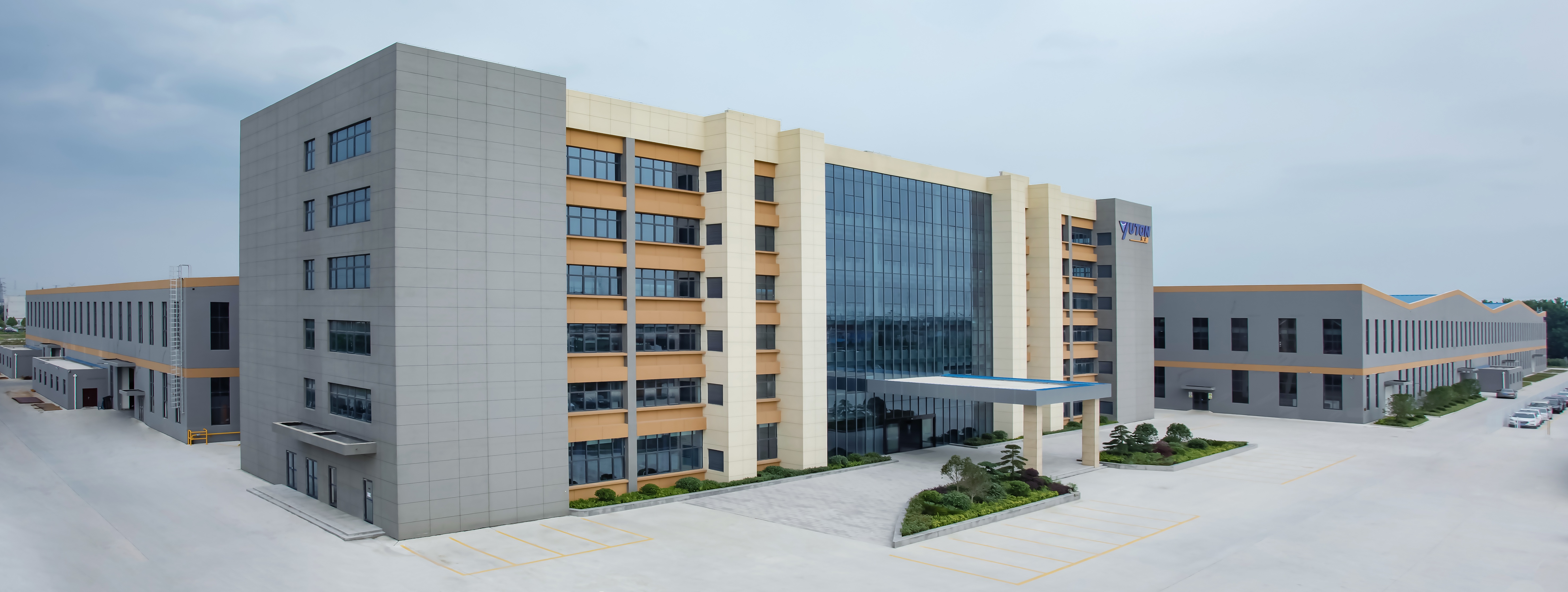
YUTON Wooden Door Equipment has been building these configurations since 2003 from a 110,666.67 m² facility in Haian City, Jiangsu Province, with 55 R&D engineers and technicians, 155 employees, and 458 flexible wooden door production lines in operation. The five configurations above can be supplied individually, as units, or as a full line.
Next step: send your workpiece envelope — door leaf, frame and architrave length, width and thickness — together with your order mix, and the configuration set will be reviewed against published ranges before any quotation is issued. One unit is the minimum order quantity, so a single configuration can be tested in your own plant before committing to a line.
Email: shanghai@yuetong.com.cn · Website: www.yuetong.com.cn · WhatsApp: +86 139 1832 8385 · Download the product catalogue: YUTON Product Catalogue (PDF)
Contact: Neo, Jack, Lucy, May Wang · Tel: +86 188 6270 3058 (Neo) · +86 139 1832 8385 (Jack) · +86 152 5066 9725 (Lucy) · +86 195 5509 6968 (May Wang) · Address: No.77, Tongyu South Road, Chengdong Town, Haian City, Jiangsu Province, China.
Have Questions or Need More Details?
Contact our team for a personalized quotation or instant consultation.
Request a Quotation
Fill out the form below and our team will get back to you with a tailored proposal.
WhatsApp Direct Chat
Prefer to chat in real-time? Message us on WhatsApp for instant assistance & quick answers.
- Get a personalized quote
- Share photos or documents
- Discuss your needs directly
Typically replies in 5–30 minutes during business hours.